Rio’s Carnival Themes – Enredos – for 2024

The main parades of the Grupo Especial in Rio de Janeiro’s carnival take place on the nights of Sunday, 11 February and Monday, 12 February 2024. The 12 schools will parade in the following order and their themes are:


SUNDAY, 11 FEBRUARY

Porta da Pedra

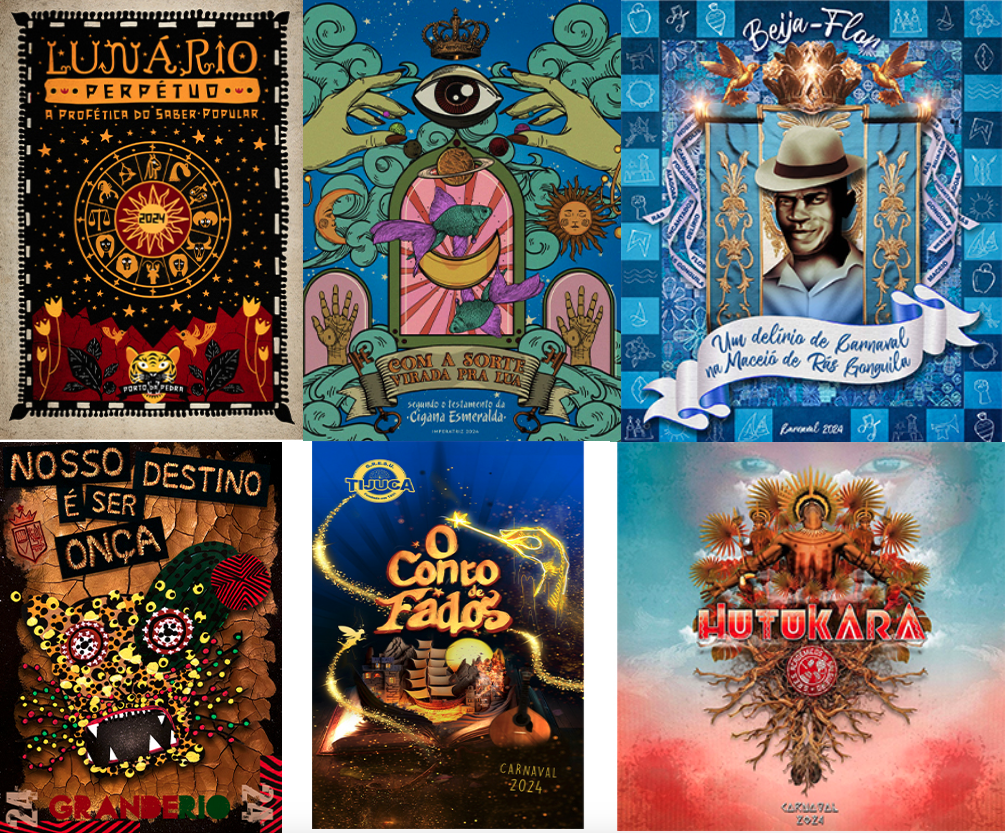
The plot of “Lunário Perpétuo: A Profética do Saber Popular” (Perpetual Lunary: The Prophetics of Popular Knowledge) is based “Lunário Perpétuo”, an almanac that dates back to medieval times, written in the 14th century in Spain by Jerónimo Cortés. The book travelled the world, arriving in Brazil and becoming one of the most widely read books in the Northeast for nearly 200 years.

Beija-Flor

“Um delírio de carnaval na Maceió de Rás Gonguila”” (A Carnival Delirium in the Maceió of Rás Gonguila) pays homage to the city of Maceió through the story of Rás Gonguila, a shoeshine boy and porter who lived in Maceió at the beginning of the 20th century. Passionate about Carnival, he founded Cavaleiro de Montes, one of the main blocos in the Alagoas capital at the time. Gonguila also proclaimed himself a member of the Ethiopian monarchy, became the Ethiopian Prince of Alagoas and an influential person who was consulted by politicians and intellectuals.

Salgueiro

In the Yanomami language, “hutukara” means “the original sky from which the earth was formed”. In 2024 Salgueiro is telling the story of the Yanomami people who occupy the largest Indigenous land area in Brazil with a samba that comes out in defence of Brazil’s indigenous peoples and defends the preservation of the Amazon.

Grande Rio

Guided by the mythical narrative of the book by Alberto Mussa, the plot for “Nosso destino é ser onça” (Our Destiny is to be a Jaguar) is a reflection on the symbolism of the jaguar for the Tupinambá people. Grande Rio promises to explore the jaguar’s link within different manifestations of Brazilian culture and express the strength of Brazil’s native peoples.

Unidos da Tijuca

“O conto de fados” (The Fairy Tale) looks at the history of Portugal through the country’s legends and tales, as well as showing the Portuguese cultural influence on Brazil. Tijuca, has strong links with Portugal, and had Vasco da Gama, a club founded by Portuguese immigrants and their descendants, as its theme in 1998, and the Portuguese language in 2002.

Imperatriz Leopoldinense

The reigning carnival champions close the first night with the storyline “Com a sorte virada pra lua segundo o testamento da cigana Esmeralda” (With Luck Turned to the Moon According to the Will of the Gypsy Esmeralda). The story is fictional and tells the tale of a gypsy who tries to decipher the world of dreams, palm reading, the influence of the stars on everyday life, lucky numbers, dates for good and bad things to happen and other forms of fortune-telling.


MONDAY, 12 FEBRUARY

Mocidade

With the storyline “Pede caju que dou… Pé de caju que dá!” (Ask for a Cashew and I’ll Give You One… I’ll Give You a Cashew!) Mocidade looks at the cashew fruit with its stories, legends and curiosities, and even puns. The idea is to show the “Brazilianness” behind this fruit that was one of the first treasures taken by the colonisers when they arrived in Brazil.

Portela

The storyline of “Um defeito de cor (A Defect of Colour)“, is based on the novel of the same name by writer Ana Maria Gonçalves, and tells the story of the character Kehinde, who is also Luísa Mahin, a formerly enslaved woman of African origin who is believed to have taken part in the organisation of the slave uprisings that shook Bahia in the first decades of the 19th century. The samba depicts the trajectory of this black heroine and shows passages from Afro-Brazilian history to tell of Luísa’s connection with her son, the black abolitionist lawyer Luiz Gama.

Vila Isabel

In 2024 Vila Isabel returns to its 1993 storyline “Gbala – Viagem ao Templo da Criação” (Gbala – Journey to the Temple of Creation). The plot is based on a fictional story from Yoruba culture to show the harm mankind does to the world and to argue the case that children and their purity are the salvation of the planet. The samba was written by the great Martinho da Vila.

Mangueira

The famous “verde e rosa” will pay homage to the great samba singer Alcione with “A negra voz do amanhã” (The Black Voice of Tomorrow). It is the story of the singer from Maranhão, starting from Alcione’s childhood and musical beginnings in São Luís to her connection with Mangueira. It will also reflect Alcione’s contribution to its youth school, Mangueira do Amanhã, of which she is the founder and president of honour.

Paraíso do Tuiuti

“Glória ao Almirante Negro!” (Glory to the Black Admiral!) will use the language of comic books to tell the story of João Cândido, the Brazilian naval rating led the Revolta da Chibata in 1910. Cândido led his peers in the navy in a revolt calling for an end to the mistreatment, malnutrition and physical punishment of sailors, which had already been abolished at the beginning of the Republic, but was still in use.

Viradouro

The closing storyline of  “Arroboboi, Dangbé” talks about the energy of the cult of the powerful serpent god of Voodoo mythology, Vodou, the force that manifested itself in epic battles on the West Coast of Africa and influenced the struggles of the all female Mino warriors of the kingdom of Dahomey, a dynasty of women chosen by the python spirit, Dangbé.

Festival do Rio 2023 Award Winners

The 25th edition of Festival do Rio, Rio de Janeiro’s International Film Festival, announced its winners on Sunday, 15 October for the competitive sections of the festival, including Première Brasil, Première Brasil – New Trends, and the Felix Awards for films that celebrate LGBTQIAPN+- culture and topics.

Vera Egito’s “A Batalha da Rua Maria Antônia”, a black and white drama about a pivotal night in 1968 as students on the left and right fought each other, was chosen by the jury to be the best fiction film in Première Brasil, while “Othelo, o Grande”, by Lucas H. Rossi dos Santos, about the great Brazilian actor and comedian, Grande Otelo, was chosen top documentary. There were three top acting awards and the art direction award for Carolina Markowicz’s “Pedágio”, Markowicz having won the festival’s screenplay award in 2022.

Première Brasil is considered one of the world’s main showcases and shop windows for Brazilian cinema and in 2023 over 90 Brazilian productions were selected – features and shorts – showcasing a wide panorama of young and established filmmakers.

Festival do Rio had received 1,108 entries for Première Brasil in 2023 – 790 shorts and 318 features – from Brazilian filmmakers, as well as from co-production partners with Brazil. There were over 40 world premieres amongst the 54 feature films and 38 shorts screening in Première Brasil during the festival. Works of fiction and documentaries. In 2022, 450 shorts and 200 features were submitted for Première Brasil.

The awards for 2023 were announced and presented during a gala ceremony Sunday at the historic Cine Odeon – Centro Cultural Luiz Severiano Ribeiro, in Cinelândia in the heart of Rio de Janeiro, and hosted by actors Carla Cristina Cardozo and Bokassa Kabengele.

The festival had run from 5 to 15 October, and also included RioMarket. It had started with a screening of Fernando Trueba and Javier Mariscal’s “They Shot the Piano Player” and closed with gala screenings on 14 October of one international and one Brazilian feature, respectively Sofia Coppola’s “Priscilla” and the world premiere of Marcus Baldini’s “O Sequestro do Voo 375”.


Première Brasil – Redentor Trophy – 2023

Jury: Laís Bodanzky (President – Director, screenwriter and film producer), Gaia Furrer (Artistic director of Venice’s Giornate degli Autor), Isabél Zuaa (Collaborator on dance, film, theatre and television projects) João Vieira Jr. (Producer) and Renata Pinheiro (Director, screenwriter and art director)

Best Fiction Feature:   “A Batalha da Rua Maria Antônia”, by Vera Egito (Producer: Paranoid Filmes)

Best Documentary: “Othelo, o Grande”, by Lucas H. Rossi dos Santos (Producer: Franco Filmes)

Best Short: Cabana, by Adriana de Faria (Producer: Adriana de Faria and Tayana Pinheiro)

Special Jury Prize: “O Dia que te Conheci”, by André Novais de Oliveira (Producer: Filmes de Plástico)

Jury – Honorary Mention: “Black Rio! Black Power!” by Emílio Domingos (Producer: Espiral)

Best Director – Feature Fiction: Lillah Halla, for “Levante” (Producer: Arissas)

Best Director – Documentary: Daniel Gonçalves, for “Assexybilidade” (Producer: TV Zero)

Best Actress: Maeve Jinkings, for “Pedágio” (Producer: Biônica Filmes and O Som e a Fúria) and Grace Passô, for “O Dia que te conheci” (Producer: Filmes de Plástico)

Best Actor: Kauã Alvarenga, for “Pedágio” (Producer: Biônica Filmes and O Som e a Fúria)

Best Supporting Actress: Aline Marta Maia, for “Pedágio” (Producer: Biônica Filmes and O Som e a Fúria)

Best Supporting Actor: Carlos Francisco, for “Estranho Caminho” (Producer: Tardo Filmes)

Best Screenwriting: Guto Parente, for “Estranho Caminho” (Producer: Tardo Filmes)

Best Editing: Eva Randolph, for “Levante” (Producer: Arissas)

Best Cinematography: Evgenia Alexandrova, for “Sem Coração” (Producer: Cinemascópio Filmes)

Best Art Direction: Vicente Saldanha, for “Pedágio” (Producer: Biônica Filmes and O Som e a Fúria)


Première Brasil – New Trends (Novos Rumos) 2023

New Trends Jury: Johnny Massaro (President – Actor, director and producer), Beatriz Seigner (Screenwriter and director), Jéssica Ellen (Actress) and Pedro Bronz (Director and editor)

Best Film: “Saudade fez morada aqui dentro”, by Haroldo Borges (Producer: Plano 3 Filmes)

Best Director: Ricardo Alves Jr. for “Tudo o que você podia ser” (Producer: Entrefimes)

Special Jury Prize: “A Alma das Coisas”, by Douglas Soares (Producer: Acalante Filmes)

Jury – Honorary Mention: “Iracemas”, by Tuca Siqueira (Producer: República Pureza Olinda)

Jury – Honorary Mention: “Bizarros Peixes das Fossas Abissais”, by Marão

Best Short: “Dependências”, by Luisa Arraes (Producer: Cosmo Cine and Paris Produções)


Felix Awards 2023

Felix Jury: Sandro Fiorin (President – Producer and distributor), Andrea Capella (Director and visual artist) , Pedro Henrique França (Director, screenwriter, actor and journalist) and Wescla Vasconcelos (Screenwriter, director and actress)

The winners, selected from 15 international and 9 Brazilian features and six Brazilian shorts screening in this year’s Festival do Rio that celebrate LGBTQIAPN+- culture and topics, are:

Best Brazilian Feature: “Sem Coração”, by Tião and Nara Normande

Best International Feature: “20.000 Espécies de Abejas” (20,000 Species of Bees), by Estibaliz Urresola Solaguren (Spain)

Best Documentary: “Orlando, Ma Biografia Politique” (Orlando, My Political Biography), by Paul B. Preciado (France)

Jury – Honorary Mention – Documentary:  “Assexybilidade”, by Daniel Gonçalves

Special Jury Prize: “Tudo o que você podia ser”, by Ricardo Alves Jr.

Suzy Capó Trophy – Personality of the Year: Nanda Costa and Lan Lanh

Rio’s Carnival parade order in 2024

In 2024 the main parades of the Grupo Especial samba schools during Rio de Janeiro’s carnival are scheduled to take place on the nights of Sunday, 11 February and Monday, 12 February 2024. The 12 schools will parade in the following order:

Sunday, 11 February

  • Porta da Pedra
  • Beija-Flor
  • Salgueiro
  • Grande Rio
  • Unidos da Tijuca
  • Imperatriz Leopoldinense

Monday, 12 February 2024.

  • Mocidade
  • Portela
  • Vila Isabel
  • Mangueira
  • Paraíso do Tuiuti
  • Viradouro  

Porta da Pedra returns to Grupo Especial in 2024

G.R.E.S Unidos do Porto da Pedra has topped Série Ouro, the second league of samba schools, with its samba “A Invenção da Amazônia”. The school will now parade with the elite schools of the Grupo Especial in 2024.

The samba was based around a book by Jules Verne published as “La Jangada” in French in 1881, and “Eight Hundred Leagues of the Amazon” in English.

It was Porto da Pedra and its returning carnavaleso, Mauro Quintaes,  that featured the Great Train Robber Ronnie Biggs in its carnival samba “Samba No Pé e Mãos ao Alto isto é um Assalto” (Samba On Your Feet and Hands Up. This is a Robbery) back in 1998 in Grupo Especial..


Imperatriz Leopoldinense is the champion school in 2023

 Imperatriz Leopoldinense is the champion of Rio’s carnival, 22 years after its last title. The green, white and gold school of Ramos paraded on the Monday night with “O aperreio do cabra que o excomungado tratou com má-querença e o santíssimo não deu guarida”, of carnavalesco Leandro Vieira.

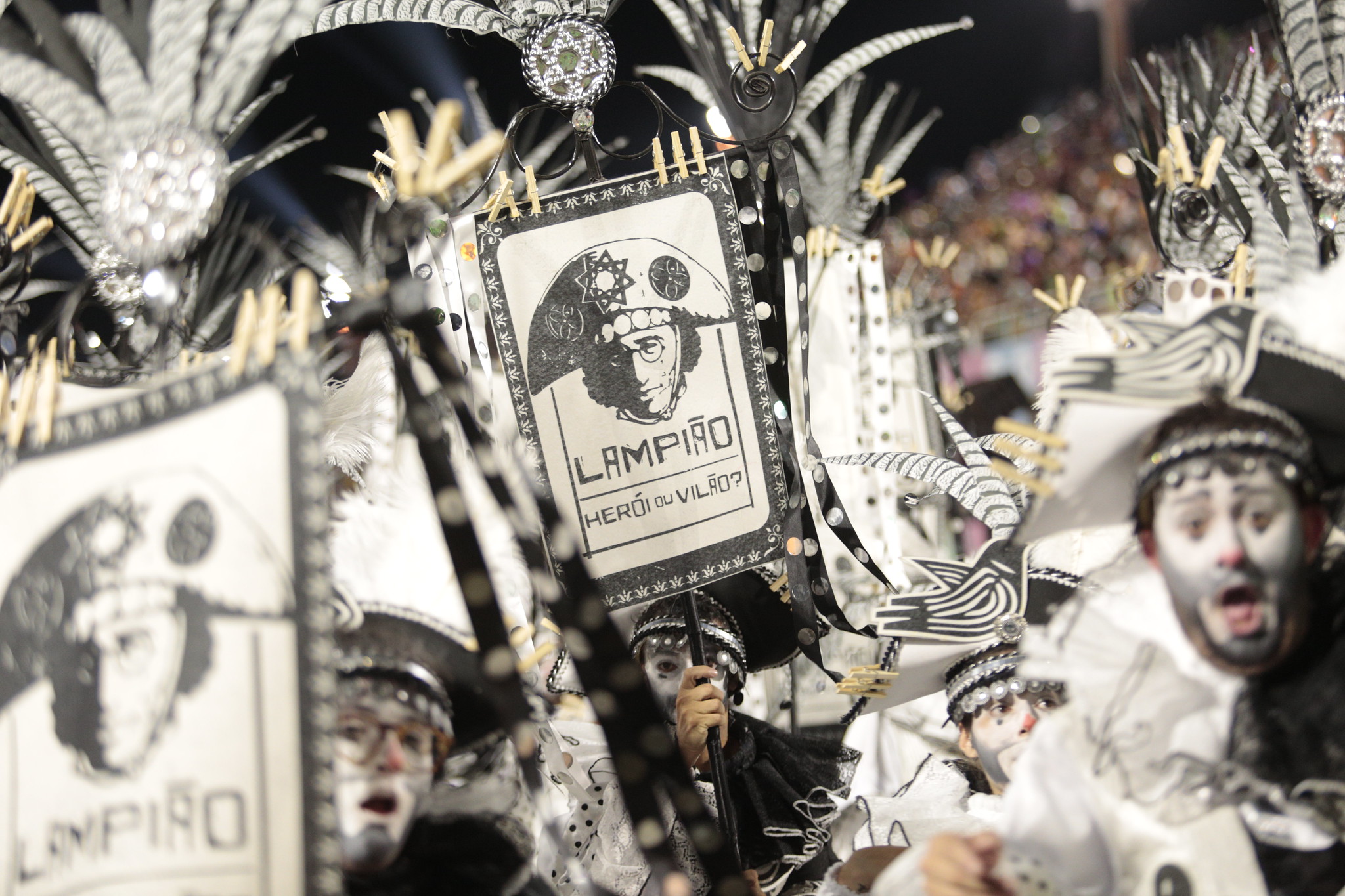
Imperatriz Leopoldinense travelled to the northeast to tell the story of the arrival in both heaven and hell of the bandit leader and folk hero, Lampião. It is the school’s ninth title and the carnavlesco’s third title having  previously won with Mangueira in 2016 and 2019, in addition to having won the Série Ouro twice, with Imperatriz itself in 2020 and with Império Serrano in 2022. But it is Império Serrano that is relegated straight back to Série Ouro. 

Joining Imperatriz for the winners’ parade will be Viradouro, Vila Isabel, Beija-Flor, Mangueira and Grande Rio.

The results of Rio’s Carnival Parade in 2023 were:

  • Imperatriz Leopoldinense (269.8 out of 270) 
  • Viradouro (269.7) 
  • Vila Isabel (269.3) 
  • Beija-Flor (269.2) 
  • Mangueira (269.1)
  • Grande Rio (268.6) 
  • Salgueiro (268.5)
  • Paraíso do Tuiuti (268.3)
  • Unidos da Tijuca (268.2) 
  • Portela (267.7) 
  • Mocidade (266.6)
  • Imperio Serrano  (265.6)

And the winner is….

The markings and results of the main samba school parades in Rio will now start at 16.00 on Wednesday, 22 February at the sambodromo (19.00 in UK).

In all, 12 schools from the Grupo Especial and 15 from the Série Ouro will be evaluated in the categories of drums, samba, harmony, evolution, plot, allegories and props, costumes, front commission and mestre-sala and  porta-bandeira (ballroom master and flag bearer).

This year, there will only be four marks per category, and only the lowest note will be discarded – unlike recent years when there were five sets of marks and the highest was also removed. The final classification will be determined by the total sum of the marks and often just one or two percentage points out of 270 can make the difference of winning, losing or being relegated.

Carnival 2023: Day Two of Grupo Especial – Rio’s Top Samba Schools

Thanks to the Riotur.Rio team of talented and hard working photographers, a quick and colourful look at the second of the two nights of parades of Rio’s top samba schools, the Grupo Especial. On 20 February it was the turn of Paraíso do Tuiuti, Portela, Vila Isabel, Imperatriz Leopoldinense, Beija-Flor and Viradouro.

The results of the Grupo Especial, which covers Rio’s top twelve samba schools, will be announced in Rio on Wednesday (22 February) starting at 15.00 local time (18.00 in London). The lowest scoring school will be relegated to the Série Ouro for 2024, with the winner of this year’s Série Ouro joining the top 12 in 2024.

Dates of the parade of the Grupo Especial in 2024 are 11 and 12 February.

Carnival 2023: Day One of Grupo Especial – Rio’s Top Samba Schools

Baile do Copa – Copacabana Palace

Saturday, 18 February,  sees the return of the iconic Baile do Copa carnival ball to the equally iconic Copacabana Palace, A Belmond Hotel in Rio de Janeiro.

The hotel is celebrating its centenary this year and the ball – that took place for the first time in 1924 – will celebrate its own centenary in 2024. This year’s theme for the ball is “Time Tunnel” to encourage guests to dress to recreate some of those special moments from the hotel’s past 100 years, or even if they wish from its future. The hotel promises an evening of “decadence, joy and glorious excess,…”, something we all need in 2023. Many of the great and the good have attended the ball over the decades from Orson Welles to Brigitte Bardot, to name just two.