While the debate over if there should be 12 or 15 schools in the Grupo Especial at next year’s Rio carnival continues, we already know the themes of two of the schools.
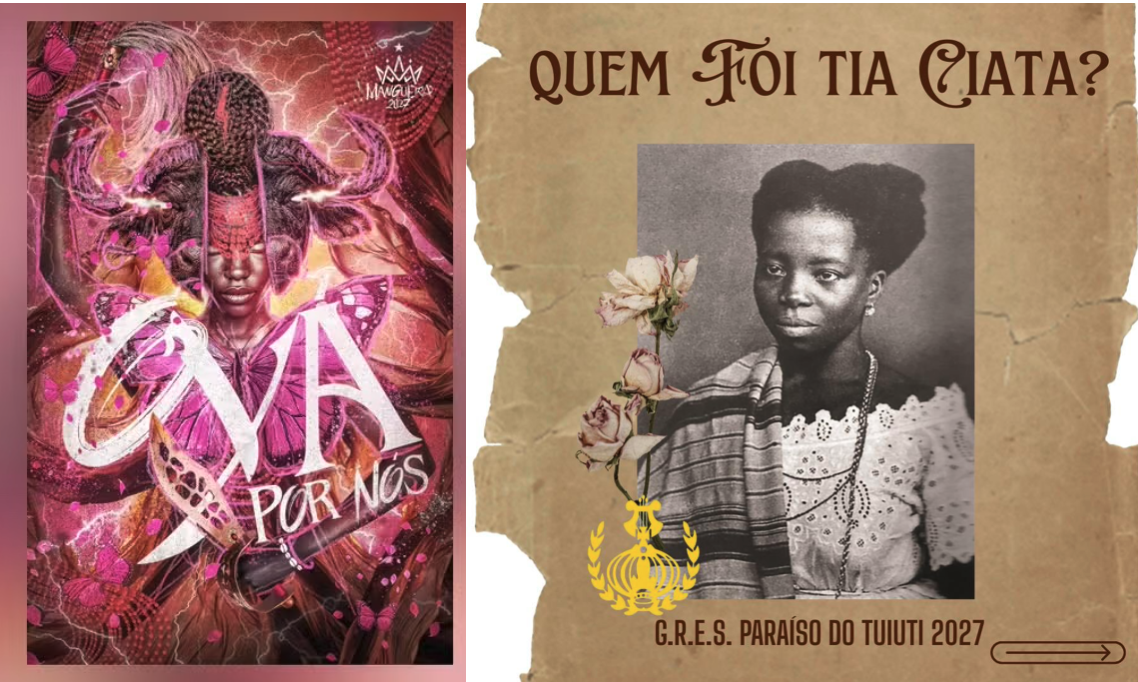
Oyá, a Candomblé deity also known as Iansã, who represents wind, lightning, storms, transformation, and the marketplace, will be the theme of Estação Primeira de Mangueira’s “Oyá Por Nós”. Oyá has already featured for Mangueira in its 2016 winning theme, “A Menina dos Olhos de Oyá” (The Apple of Oyá’s eye), which paid tribute to Maria Bethânia.
Paraíso do Tuiuti will develop the theme “Ciata: The Black Mother of Samba” for its parade in 2027. The school will portray the life story of one of the matriarchs of samba, Hilária Batista de Almeida (1854-1924), known as Tia Ciata, a key figure in the early days of samba in Rio, who is also recognised for her role as a Black community leader and guardian of Afro-Brazilian culture.
In 2027 the parades of the top schools will take place on the nights of 7, 8 and 9 February and both schools will be looking to bounce back from poor results in 2026 when they came 6th and 9th respectively out of the top 12 schools.
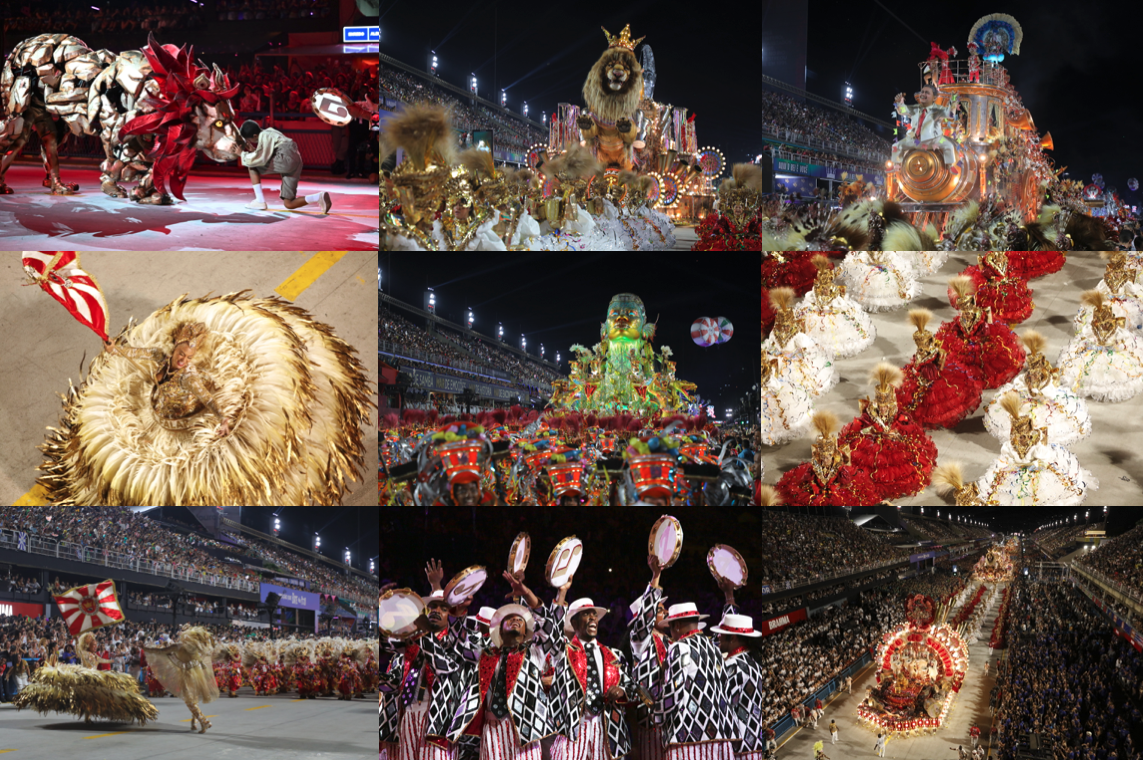
The champions of Grupo Especial – the Premier League of samba – for 2026 are Unidos do Viradouro, scoring the maximum of 270 points out of 270. Second were last year’s champion, G.R.E.S Beija-Flor de Nilópolis with 269.9. Both schools paraded on Monday.
Viradouro paid tribute to Mestre Ciça, one of the biggest names in the history of Rio’s carnival, with the theme “Pra Cima, Ciça” (Up, Ciça). Moacyr da Silva Pinto, Mestre Ciça, who will turn 70 in 2026 was taking part in his 55th parade. He has won two titles for Viradouro, in 2020 and 2024, and now adds a third in 2026, and is recognised for his longevity, strength and innovation at the head of the school’s percussion sections.
Acadêmicos de Niterói are relegated.
The full result for 2026, with the top six parading again at Saturday’s champion’s parade, were:
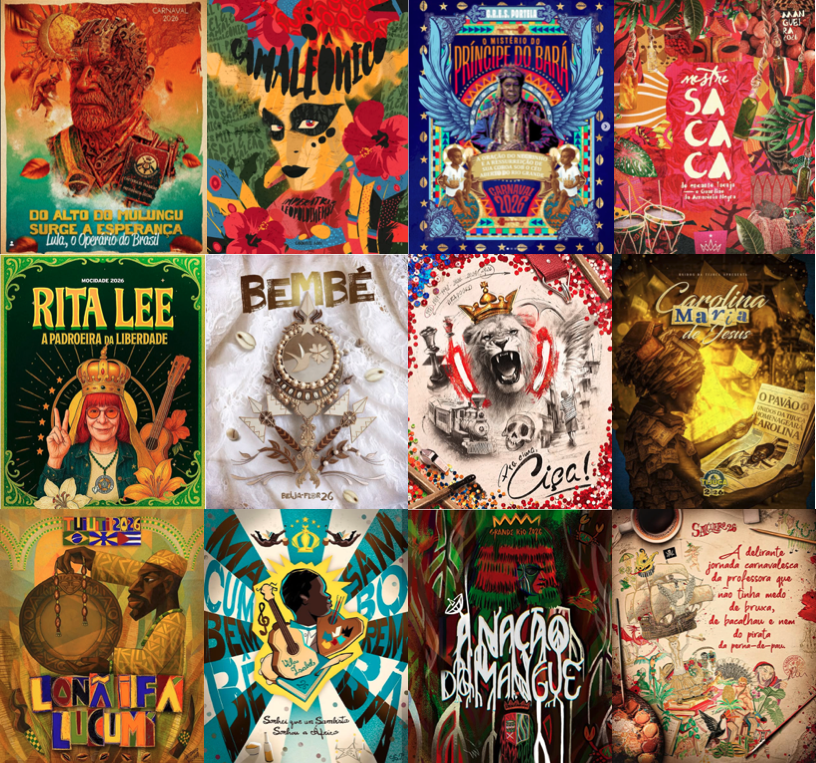
A diverse selection of themes and story lines have been chosen to be presented in 2026. Acadêmicos de Niterói will open the 2026 parades with a theme based on the life of President Luiz Inácio Lula da Silva. With the theme “”From the Top of the Mulungu Tree, Hope Arises: Lula, the Worker of Brazil.”, the schooltells the story of the president from his childhood in the hinterlands of Pernambuco to his arrival at the Presidency. The plot uses the mulungu, a tree typical of the Pernambuco countryside, as a symbol of Lula’s origins and political path.
Imperatriz pays tribute to Ney Matogrosso, one of the biggest names in Brazilian music. The theme, entitled “Camaleônico” (Chameleon), is a portrait of the singer’s artistic and performative multiplicity. The school revisits hits such as “Sangue Latino,” “Rosa de Hiroshima,” “O Vira,” “Homem com H” and “Metamorfose Ambulante,” highlighting Ney’s influence on Brazilian culture.
Portela’s theme is “The Mystery of the Prince of Bará — The Prayer of the Black Boy and the Resurrection of His Crown Under the Open Sky of Rio Grande,” in honour of Prince Custódio, a historical and spiritual figure of African origin who marked Afro-Gaúcho culture in the 19th century. The paradeaddresses the religious, cultural and political legacy of the Prince, highlighting the black presence in southern Brazil and the amalgamation between African-based religions and popular traditions.
Mangueira’s theme “Mestre Sacaca do Encanto Tucuju – The Guardian of the Black Amazon,” tells the story of Mestre Sacaca (Raimundo dos Santos Souza), a reference in Afro-indigenous knowledge in Amapá. Known as the “Doctor of the Forest,” he was renowned for his knowledge of Amazonian herbs, roots, and saps, used in the treatment of diseases and community care. Mestre Sacaca was also a marabaixeiro, defender of the forest, and an active figure in the Amapá carnival, where he served as King Momo for over 20 years.
Mocidade pays tribute to Rita Lee, who died in 2023, with the theme “Rita Lee, Patron Saint of Freedom.” The parade celebrates the musical, aesthetic and behavioural legacy of the iconic artist, a symbol of avant-garde and freedom of expression.
Current champion, Beija-Flor focuses on the Bembé do Mercado, a ceremony held for over 130 years in Santo Amaro da Purificação, in the Recôncavo Baiano, considered the largest street candomblé in the world. Created in 1889, one year after the abolition of slavery, Bembé brings together dozens of terreiros (places of worship) and celebrates freedom through public rituals, processions and offerings to the orixás (deities). The festival is part of the Intangible Cultural Heritage of Bahia and Brazil and is seeking recognition from UNESCO.
Viradouro pays tribute to Mestre Ciça, one of the biggest names in the history of Rio’s carnival, with the theme “Pra Cima, Ciça” (Up, Ciça). Moacyr da Silva Pinto, Mestre Ciça, will turn 70 in 2026 and will be taking part in his 55th parade. He has won two titles for Viradouro, in 2020 and 2024, and is recognised for his longevity, strength and innovation at the head of the school’s percussion sections.
Unidos da Tijuca pays tribute to writer Carolina Maria de Jesus. Considered one of the most powerful voices in Brazilian literature, Carolina portrayed life in the favelas and social inequalities in depth. Her best-known book, “Quarto de Despejo: Diário de uma Favelada” (The Room of Disposal: Diary of a Slum Dweller), published in 1960, had a major impact in Brazil and abroad, and is still a reference on the reality of the suburbs today.
Paraíso do Tuiuti theme ,”Lonã Ifá Lukumi”, addresses an Afro-Caribbean religious aspect that is being rediscovered in Brazil. The theme looks at the Ifá religion, mixing Brazilian and Caribbean sounds in the melody.
Vila Isabel’s theme “Macumbembê, Samborembá: I Dreamed that a Samba Dancer Dreamed of Africa,” honours Heitor dos Prazeres, an artist who played a fundamental role in the history of samba and carnival. Creator of the expressions “Little Africa” and “Africa in Miniature,” Heitor was an ogã at Tia Ciata’s terreiro, participated in the first carnival ranchos, and had internationally recognised works, including a painting acquired by Queen Elizabeth II. The parade has dreams as the driving force behind its central theme.
Grande Rio brings Manguebeat, a cultural movement that emerged in Pernambuco in the 1990s, mixing regional rhythms such as maracatu with rock, hip-hop, and electronic music. The school delves into the symbolism of the mangroves to show how culture, music and social transformation spring from the mud, with references to alfaias, caboclos de lança, the lyrics of Chico Science and the manifesto of Fred 04.
Last, but far from least, Salgueiro will close out the carnival parades in 2026 by paying tribute to the carnavalesco Rosa Magalhães, one of the greatest, who died in 2024. The samba, entitled “The Delirious Carnival Journey of the Teacher Who Was Not Afraid of Witches, Codfish or Even the Pirate with a Wooden Leg” (“A delirante jornada carnavalesca da professora que não tinha medo de bruxa, do bacalhau e do pirata da perna-de-pau”) is a playful parade inspired by the artist’s creative career, bringing together characters, myths and references from her historic parades from past carnivals.
A notable five Academy award nomination for Brazil. Four for Kleber Mendonca Filho’s “The Secret Agent” (film, international feature, actor and casting), that opens in the UK on 20 February, and one for the cinematography of Adolpho Veloso on “Train Dreams”, currently streaming on Netflix.
“The Secret Agent”, which had its Rio premiere during Festival do Rio, is the 12th non-English language film to be nominated for both International Feature Film and Best Picture in the same year, “Sentimental Value” is the 13th. To date, “Parasite” is the only film to win both International Feature Film and Best Picture.
For the eighth year in a row, at least one non-English language film has been nominated in the Best Picture category. Wagner Moura (The Secret Agent) is one of a record four non-English language performances that are nominated this year (Inga Ibsdotter Lilleaas, Wagner Moura, Renate Reinsve and Stellan Skarsgård). The previous record of three was set in 1976 (Marie-Christine Barrault, Giancarlo Giannini and Liv Ullmann).
The Secret Agent is the sixth nomination for Brazil in the international feature film (foreign language) category. Other nominations were for “Keeper of Promises (The Given Word)” (1962), “O Quatrilho” (1995), “Four Days in September” (1997), “Central Station” (1998) and “I’m Still Here” (2024), which won last year’s award.
The news magazine, Veja Rio, publishes an annual list – Comer & Beber (Eat & Drink) of the best restaurants and bars in Rio de Janeiro. For 2025-26 the selection includes a top three of:
Asian: Elena, Mee, Mr. Lam; Contemporary: Lasai, Oteque, Oseille; Feijoada: Academia da Cachaça, Rubaiyat, Aconchego Carioca; French: Casa 201, Chez Claude Francese Brasserie; Gastrobar: Balcão 201, Nosso, Eleninha; Hamburger: Bal. Clan, Encarnado, T.T. Burger; Italian: Gero,Grado, Nido;Japanese: San Omakase, Haru, Mitsuba; Meat: Rufino,Malta Beef Club, Giuseppe Grill; Pizza: Ferro e Farinha, Capricciosa,Ellal; Portuguese: Rancho Portugues, Gajos d’Ouro, EA Gastronomia; Seafood: Satyricon, Polvo Marisqueira, Ocyá; Vegetarian: Teva,.org Bistro, Brota; Wine Bar: Libo, Belisco, Virtuoso; Boteco: Bar da Frente, Capiau; Botica; Kiosk: La na Rosi, Sel d’Ipanema,Ginga.
The 27th edition of Festival do Rio, Rio de Janeiro’s International Film Festival, announced its winners Sunday (12 October) for the competitive sections of the festival, including Première Brasil, New Trends and the Felix Awards for films that celebrate LGBTQIAPN+- culture and topics.
“Pequenas Criaturas” (Little Creatures) directed by Anne Pinheiro Guimarães, and produced by Bananeira Filmes’ was chosen by the jury to be the best fiction film in Première Brasil, while Tainá Müller and Ísis Broken’s “Apolo”, produced by Capuris, won best documentary. “Pequenas Criaturas” also picked up best best art direction while “Apolo” won best soundtrack.
Set in Brasilia in 1986, “Little Creatures” is the story of a woman who has barely settled into Brazil’s futuristic capital with her family when her husband departs on a business trip. Abandoned in an unfamiliar city, she questions her choices while feeling frustrated and adrift, as her teenage son rebels and discovers first love, and her seven-year-old finds magic in unlikely friendships and invisible possibilities.
The documentary “Apolo” follows Isis and Lourenzo, who after conceiving a child naturally, during the COVID-19 pandemic, embarked on a journey across Brazil in search of respectful and specialised prenatal care. At the same time, they continued their daily struggle, for their family’s rights in a country that has one of the highest cases of trans people being killed.
Overall the prizes were well spread out among the rest of the competing films, but in the main competition, Marcio Reolon and Filipe Matzembacher’s “Ato Noturno” (Night Stage), that premiered in Berlin’s Panorma, picked up trophies for best actor, for Gabriel Faryas’ performance, for best cinematography, and for the directors’ screenplay. It was also chosen to be the best Brazilian feature by the FELIX Jury that celebrates LGBTQIAPN+- culture and topics.
“Ruas da Glória” (Street of Gloria) picked up both the supporting actor and actress prizes for performances by Alejandro Claveaux and Diva Mennier, while Klara Castanho won for best actress in Susanna Lira’s “#SalveRosa” (#SaveRose) that also won for best costume design. Renata Russo becoming the first winner in this new festival category. The film also picked up the prestigious audience award for best feature in Première Brasil.
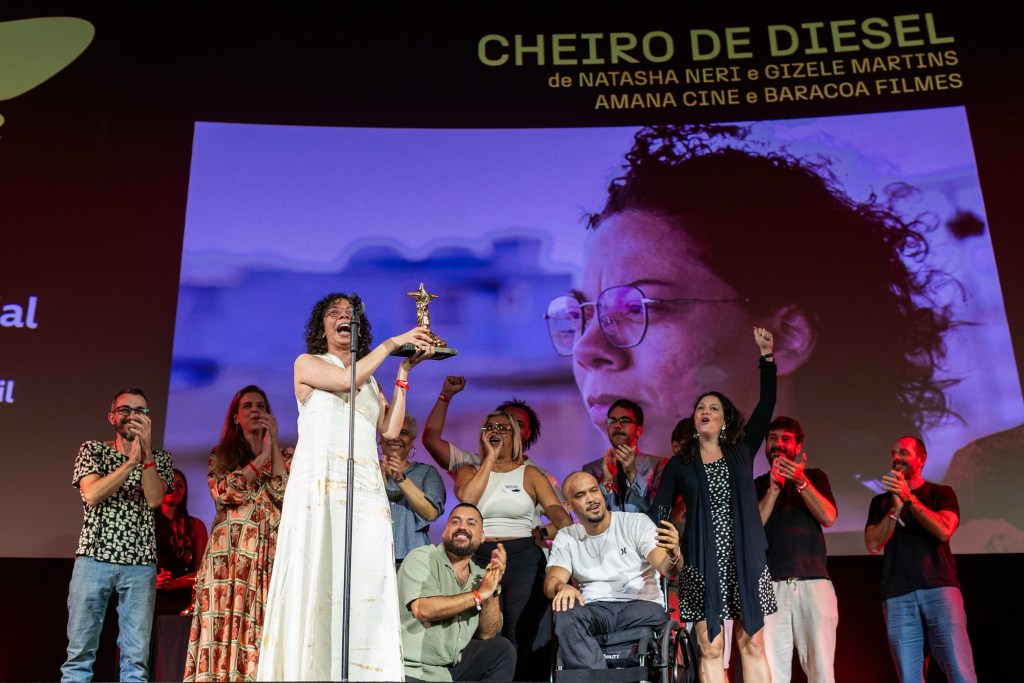
Festival audiences chose Natasha Neri and Gizele Martin’s “Cheiro de Diesel” (Small of Diesel) as best documentary. A documentary about the collective traumas caused by the militarisation of Rio de Janeiro’s favelas during the Armed Forces’ occupation for major sporting events, it also picked up the Special Jury Prize.
“Uma em Mil” (One in a Thousand) directed by Jonatas Rubert and Tiago Ruber was chosen best film by the New Trends jury while festival audiences picked “Herança de Narcisa” (Narcisa’s Will) as their favourite film in New Trends.
Première Brasil is considered one of the world’s most important showcases and shop windows for Brazilian cinema, and in 2025 over 120 Brazilian productions were selected – features and shorts – allowing the festival to showcase a wide panorama of young and established Brazilian filmmakers.
Festival do Rio received 1320 entries for Première Brasil in 2025 – 320 features and over one thousand shorts – from filmmakers from across Brazil, as well as co-productions with other countries. There were 54 world premieres amongst the films selected for Première Brasil, screening in official competition, New Directions, Portraits, The State of Things, Midnight Movies and Hors Concours, among other festival sections.
The Felix jury, for films that celebrate LGBTQIAPN+- culture and topics, picked “Ato Noturno” (Night Stage), directed by Marcio Reolon and Filipe Matzembacher, as best Brazilian feature; Australia’s “Lesbian Space Princess”, directed by Leela Varghese and Emma Hough Hobb, as best international feature; and Alain Ribeiro’s “Copacabana, 4 de Maio” as best documentary, a film that shows how Rio de Janeiro prepared and how the fans were affected, waiting anxiously for the May 4th concert by Madonna on Copacabana Beach.
The awards for 2025 were announced and presented during a gala ceremony Sunday at the historic Cine Odeon – Centro Cultural Luiz Severiano Ribeiro, in Cinelândia in the heart of Rio de Janeiro.
Première Brasil – Redentor Trophy – 2025
Premiere Brasil Jury: President: Eric Lagesse (distributor, sales agent and producer), Carolina Kotscho (author, director and producer), Claudia Kopke (costume designer), Elena Manrique (executive producer), Javier Garcia Puerto (film and video curator), Luciana Bezerra (director, screenwriter and actress),Paula Astorga (producer and audiovisual project consultant)
Best Fiction Feature: “PEQUENAS CRIATURAS”, directed by Anne Pinheiro Guimarães
Production Company: BANANEIRA FILMES
Best Documentary: “APOLO”, directed by Tainá Müller and Ísis Broken
Production Company: CAPURI
Best Short: (ex aequo)
“SEBASTIANA”, directed by Pedro de Alencar
Production Company: TERRA BRUTA / CÉU E SANGUE FILMES
“O FAZ-TUDO”, directed by Fábio Leal
Production Company: CASA LÍQUIDA
Special Jury Prize: “CHEIRO DE DIESEL”, directed by Natasha Neri and Gizele Martins
Production Company: AMANA CINE / BARACOA FILMES
Best Director – Feature Fiction: ROGÉRIO NUNES, for “Coração das Trevas”
Best Director – Documentary: MINI KERTI, for “Dona Onete – Meu Coração Neste Pedacinho Aqui”
Best Actress:KLARA CASTANHO, for “#SalveRosa”
Best Actor: GABRIEL FARYAS, for “Ato Noturno”
Best Supporting Actress: DIVA MENNER, for “Ruas da Glória”
Best Supporting Actor: ALEJANDRO CLAVEAUX, for “Ruas da Glória”
Best Screenplay: FILIPE MATZEMBACHER and MARCIO REOLON, for “Ato Noturno”
Best Editing: ANDRÉ FINOTTI, for “Honestino”
Best Cinematography: LUCIANA BASEGGIO, for “Ato Noturno”
Best Art Direction: CLAUDIA ANDRADE, for “Pequenas Criaturas”
Best Costume Design: RENATA RUSSO, for “#SalveRosa”
Best Sound: ARIEL HENRIQUE and TALES MANFRINATO, for “Love Kills”
Best Soundtrack: PLÍNIO PROFETA, for “Apolo”
Première Brasil – New Trends (Novos Rumos) 2025
New Trends Jury: President: Beth Formaggini(filmmaker), Davi Pretto (director and screenwriter), Lucas H. Rossi (director and producer), Rafael Sampaio (producer and curator), Thalita Carauta (actress)
Best Film: “UMA EM MIL”, directed by Jonatas Rubert and Tiago Rubert
Production Company: ATALA
Best Director: JOÃO BORGES, for “Espelho Cigano”
Special Jury Prize: ÂNGELA LEAL and LEANDRA LEAL, for “Nada a Fazer”
Best Actor: MÁRCIO VITO, for “Eu Não Te Ouço”
Best Actress: ANA FLAVIA CAVALCANTE and MAWUSI TULANI, for “Criadas”
Special Mention (Best Actress): DOCY MOREIRA, for “Espelho Cigano”
Best Short: “PONTO CEGO”, directed by Luciana Vieira and Marcel Beltrán
Production Company: CINEMA INFLAMÁVEL
Jury – Honorary Mention- Shorts: “OS ARCOS DOURADOS DE OLINDA”, directed by Douglas Henrique
Felix Awards 2025
FelixJury: President: President: Franck Finance-Madureira (journalist and film critic), Carolina Durão (director), Chica Andrade (director, producer and actress), Hedu Carvalho (creator of Cine Drag)
The Felix winners were selected from international and Brazilian productions screening in this year’s Festival do Rio that celebrate LGBTQIAPN+- culture and topics:
Best Brazilian Feature: “ATO NOTURNO”, directed by Marcio Reolon and Filipe Matzembacher
Production Company: AVANTE FILMES
Best International Feature: “A SAPATONA GALÁCTICA” (Lesbian Space Princess), directed by Leela Varghese and Emma Hough Hobb
Production Company: WE MADE A THING
Best Documentary: “COPACABANA, 4 DE MAIO”, directed by Allan Ribeiro
Production Company: ACALANTE FILMES
Special Jury Prize: “ME AME COM TERNURA” (Love Me Tender), directed by Anna Cazenave Cambet
Production Company: NOVOPROD CINÉM
Audience Awards – Public Vote 2025
Best Fiction Feature: #SalveRosa”, directed by Susanna Lira
Production Company: ELO STUDIOS / PARAMOUNT PICTURES
Best Documentary: “Cheiro de Diesel”, directed by Natasha Neri and Gizele Martins.
Production Company: AMANA CINE / BARACOA FILMES
Best Film – New Trends: “Herança de Narcisa”, directed by Clarissa Appelt and Daniel Dias
Production Company: CAMISA PRETA FILMES
NOTE: Full information about all the prize winners (and photos), and films screening during Festival do Rio, can be found on the festival’s web site (www.festivaldorio.com.br) and photos of the prize winners and all festival and RioMarket activities can be found and down loaded at http://www.flickr.com/photos/festivaldorio.
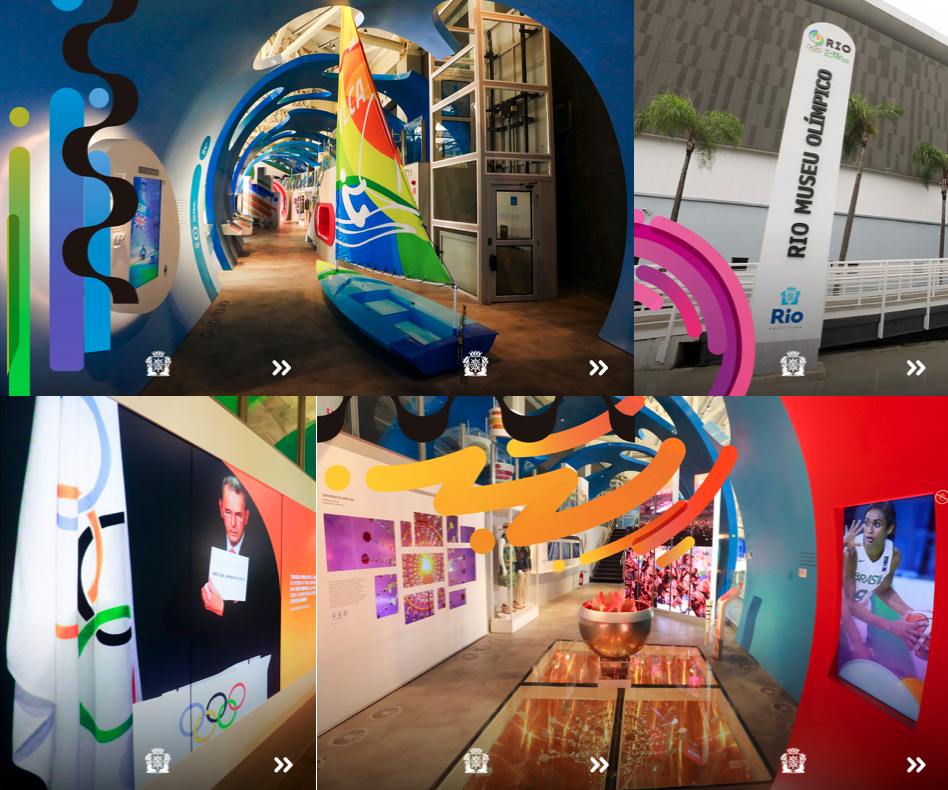
A new Rio Olympic Museum, a new cultural facility dedicated to the memory of the 2016 Games, has opened in Rio de Janeiro.
The museum occupies the upper level of the Velodrome in the Olympic Park in Barra da Tijuca, and brings together a thousand pieces distributed in thematic areas with immersive and interactive experiences. The velodrome track has been maintained.
For the first two months, the museum will operate on a soft opening basis, from Tuesday to Saturday, from 10 a.m. to 2 p.m., with free entry by booking on the museuolimpico.rio website. Access will initially be limited to 120 visitors per day, divided into four groups. After this period, visitors will be charged.
The museum is expected to be maintained by the Rock World group, organiser of Rock In Rio, which is building a theme park and entertainment centre on the neighbouring land, scheduled to open in 2028.
The museum joins The Olympic Museums Network, a global network endorsed by the International Olympic Committee (IOC), which now has 37 locations around the world.
Despite a lacklustre campaign, Brazil has kept its record of being the only nation to qualify for every World Cup finals. The finals in 2026 will be Brazil’s 23rd appearance, of which they have won five.
From South America Brazil joined Argentina, the current World Champions, in qualifying, and Ecuador have also now booked their spot in the finals. Six teams from South America will qualify, with the seventh-placed finisher going into the FIFA Play-Off Tournament.
With two rounds to go in September, the favourites to advance with Argentina, Brazil and Ecuador are currently Uruguay, Paraguay and Colombia, with Venezuela and Bolivia fighting it out for that play-off spot.
Brazil women’s team has already qualified for the FIFA Women’s World Cup in 2027 as it is Brazil that will host the 10th edition of the tournament from 24 June to 25 July 2027. Brazil is the first South American country to host the tournament.
55 years ago the 1970 FIFA World Cup took place in Mexico from 31 May to 21 June.
75 teams tried to qualify for Mexico, but only 16 could take part in four groups of four in the qualifying stage of the finals, with the top two from each group going into the quarterfinals.
It was the first World Cup held outside of South America and Europe; the first to be televised in colour; substitutes were allowed for the first time; and red and yellow cards were introduced, although no player was sent off during the tournament. Brazil was drawn in Group 3 with holders England, Romania and Czechoslovakia.
Wednesday, 3 June 1970, saw four group games at the FIFA World Cup in Mexico including the tournament debut of Brazil against Czechoslovakia. Czechoslovakia scored first, but Brazil went on to win the match 4-1 thanks to goals by Rivelino, Pele and two from Jairzinho.
On Sunday, June 7 1970, one of the greatest games in World Cup history was played in Guadalajara between Brazil and England. Brazil won the game one-nil, Jairzinho scoring. Either side could have won, and it would not have been unfair if it had ended 4-4. Gordon Banks made his famous save from Pele, and made a number of other key saves to keep Brazil out, while Bobby Moore played possibly his greatest game in defence. At the other end Felix proved he had more lives than many cats, while it was Brazil’s captain, Carlos Alberto, who had to do a lot of the tidying up. The result meant both team were favourites to progress from Group 3.
The third and final round of the group stage of the World Cup took place on Wednesday, 10 June. Brazil defeated Romania three-two to guarantee its place in the quarter finals and top its group. Pele scored twice for Brazil and, of course, Jairzinho netted one.
On Sunday, 14 June 1970, all four quarter final matches of the 1970 FIFA World Cup were played. Producing some classic games, West Germany, the only unbeaten side in the tournament along with Brazil, beat the holders, England, three-two after extra time in a rematch of the 1966 final. The hosts, Mexico, were beaten 4-1 by an Italian side coming into form, while it took Uruguay to the 117th minute and extra time to score the one goal that sent the Soviet Union home. The fourth quarter final saw Brazil beat fellow South Americans, Peru, four-two thanks to goals by Rivellino, Jairzinho, and two from Tostao.
The two semi-finals were played on Wednesday, 17 June, with Brazil facing Uruguay in and all South American semi-final while the other was an all European affair with Italy taking on West Germany. All the semi-finalists were past winners of the World Cup, Brazil, Italy and Uruguay having won it twice, and West Germany once. The only other country to win the World Cup was England. Brazil overcame Uruguay three-one, Uruguay scored first before goals from Clodoaldo, Jairzinho and Rivelino saw Brazil safely through to its fourth final.
The second semi-final is considered a World Cup classic with Italy finally overcoming West Germany four-three after extra time. Full time had ended one-one with Germany scoring in the final minute of normal time, before five goals were scored in extra time. Germany would beat Uruguay one-nil in the third place play off.
The final on Sunday 21 June in front of 107,412 fans at the Azteca Stadium in Mexico City saw two-time champions Brazil and Italy playing, the winner knowing they would get to keep the Jules Rimet trophy as three time winners.
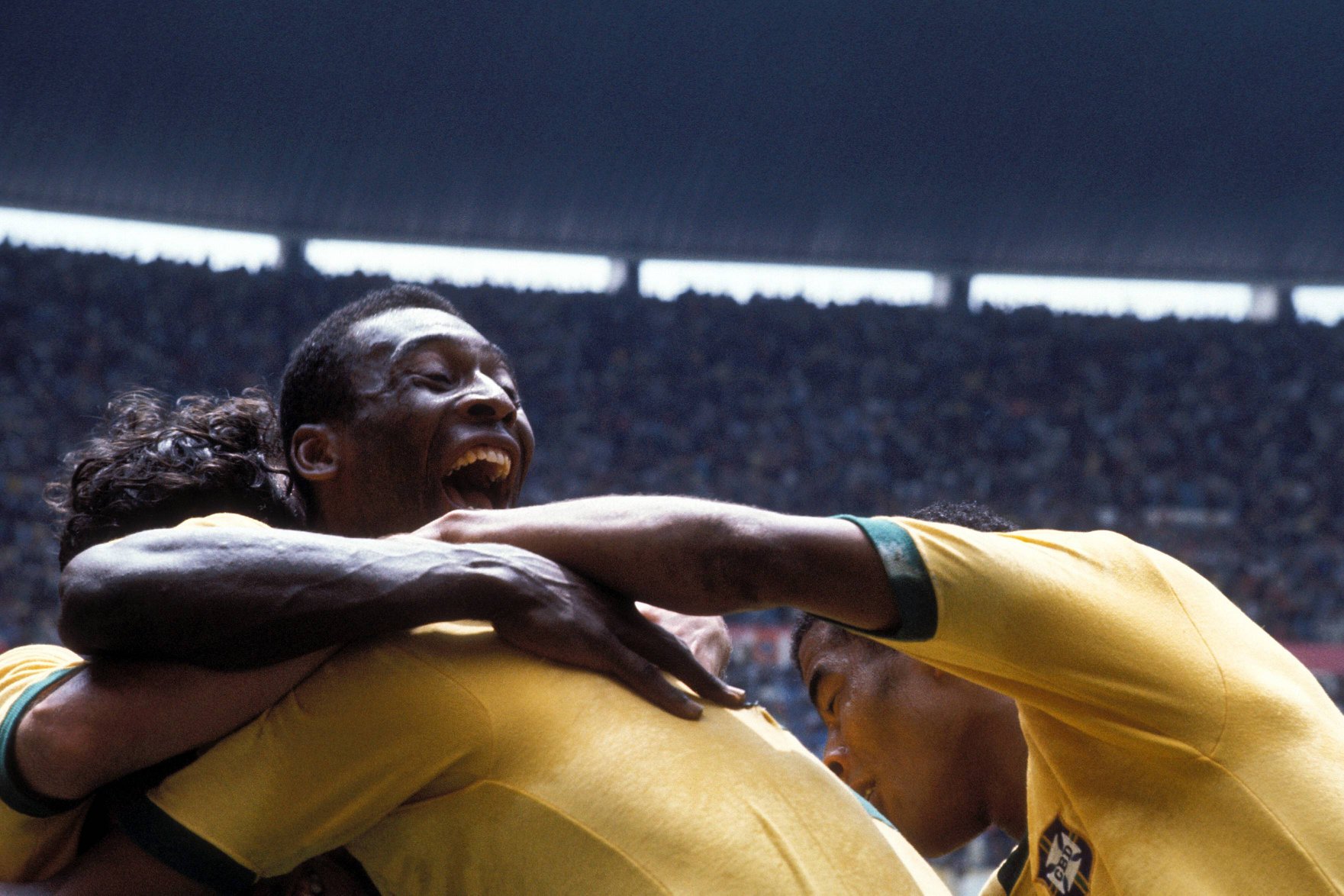
Brazil scored first through Pele, before Italy equalised to end the first half at one-one, but the second half was all Brazil in an exhilarating exhibition of attacking football. Gerson put Brazil ahead in the 21st minute, with Jairzinho scoring in the 26th minute to be the only player to score in every round and match of a World Cup. The icing on the cake was the final goal scored by the Brazilian captain, Carlos Alberto, after nearly every Brazilian player had touched the ball as they took it from deep in their half to score. The goal is generally considered the best scored in World Cup history and for many that Brazilian team is considered the greatest team ever.
Brazil has gone on to win the World Cup twice more in 1994 and 2002, and was the losing finalist in 1998. It has also hosted the World Cup final in1950 and more recently in 2014.
The International Air Transport Association (IATA), that represents some 350 airlines comprising over 80% of global air traffic, has confirmed that its 82nd AGM will be held in Rio de Janeiro from 6 to 8 June 2026 hosted by LATAM Airlines Group.
The last time the IATA AGM was in South America was in 1999, also in Rio, and before that for Brazil was 1947 when it was held in Petropolis.
Willie Walsh, IATA’s Director General, said: “It will be a great opportunity to take stock of changes over two decades of development that have seen strengthening air connectivity successfully support major world events like the FIFA World Cup and the Olympics. By meeting in the largest aviation market in South America, the AGM will highlight the great potential for aviation to be an even more powerful strategic force driving social and economic prosperity.”
Appropriately Rio reflects Brazil’s rich history in aviation, dating back to the pioneering efforts of Alberto Santos-Dumont, one of the fathers of aviation, whose historic flight in 1906 marked a significant milestone in the development of powered flight.













 Rio the Guide