Vinicius and Tom are the names chosen for Rio 2016 Olympic and Paralympic mascots

13.12.2014.Mascotes.NomesThe Rio 2016 Olympic and Paralympic Games mascots have been named. The Olympic mascot will be called Vinicius and the Paralympic mascot will be called Tom. The names were chosen by a public vote with 323, 327 votes cast.

The names, which received 44 per cent of valid votes, pay tribute to the great Brazilian musicians and composers Vinicius de Moraes and Tom Jobim. The duo were a key part of the group that created Bossa Nova. Together, Vinicius and Tom wrote The Girl from Ipanema, one of the most-played songs of all time, and many other bossa nova classics..

Vinicius and Tom were chosen ahead of the other two shortlisted pairs of names: Oba and Eba, and Tiba Tuque and Esquindim.

Rio 2016 President Carlos Nuzman said the public had chosen names that reflect the character of the Rio 2016 Games. “The names of Vinicius and Tom are recognised worldwide as a synonym for excellence, which is in line with what we want to achieve with the Rio 2016 Games,” he said. “In addition to representing the Brazilian fauna and flora, our mascots also connect to the best of our music. We are certain that they will be an inspiration to the youth.”

The origin of the Rio 2016 mascots blends fiction and reality. According to the “legend”, on 2 October 2009, when Rio de Janeiro was elected to host the Games, the great explosion of joy amongst Brazilians was felt by nature and from this energy the mascots were born.

rg_vinicius_1Vinicius, the Rio 2016 Olympic Games mascot, represents all of the different animals in Brazil. He combines the agility of cats, the sway of monkeys and the grace of birds. He can stretch his arms and legs as much as he wants and has a very acute sense of smell and amazing powers of hearing.

rg_tomTom, the Paralympic mascot, is a fusion of plants found in Brazilian forests. He is energised by photosynthesis and can pull any object from his head of leaves. He is always growing and overcoming obstacles, and believes there is no challenge that cannot be solved.

2016 Olympic and Paralympic mascots unveiled in Rio

23.11.2014.Mascotes. Forte Copacabana.The Rio 2016 Olympic and Paralympic Games mascots have been unveiled. Inspired by Brazil’s fauna and flora, the duo feature various pop culture influences, along with elements of animation and computer game characters.

“The Rio 2016 mascots represent the diversity of our culture, of our people,” said Beth Lula, the Rio 2016 brand director. “They represent our joy, our way of being. Both of them are magical creatures with super powers and relate naturally with the young audience, who we want to engage with our event so much.”

The Olympic mascot represents all of the different animals in Brazil. He combines the agility of cats, the sway of monkeys and the grace of birds. He can stretch his arms and legs as much as he wants. The Paralympic mascot is a fusion of plants found in Brazilian forests. He is energised by photosynthesis and can pull any object from his head of leaves. He is always growing and overcoming obstacles.

http://www.youtube.com/watch?v=mmGuf-qWmoA

Both mascots have their own Facebook and Twitter profiles and share a special website with fun activities for kids.

“The mascots are one of the most important symbols of the Games because they create an emotional link with the public, especially children, and are genuine ambassadors for the event,” added Lula.

What is not known yet, is their names. A poll is already open and the public can vote for their choice from a shortlist of three pairs of names: one for the Olympic mascot, the other for the Paralympic mascot, respectively. The choices are Oba and Eba, Tiba Tuque and Esquindim, and Vinicius and Tom. You can find out more about these names, and vote for your choice by Clicking Here The winning names will be announced on 14 December 2014.

The mascots were created by Birdo Produções, a São Paulo-based design and animation company that has won numerous international awards.

22.11.2014.Mascotes. Sede Rio2016

Olympic mascots visit Rio de Janeiro

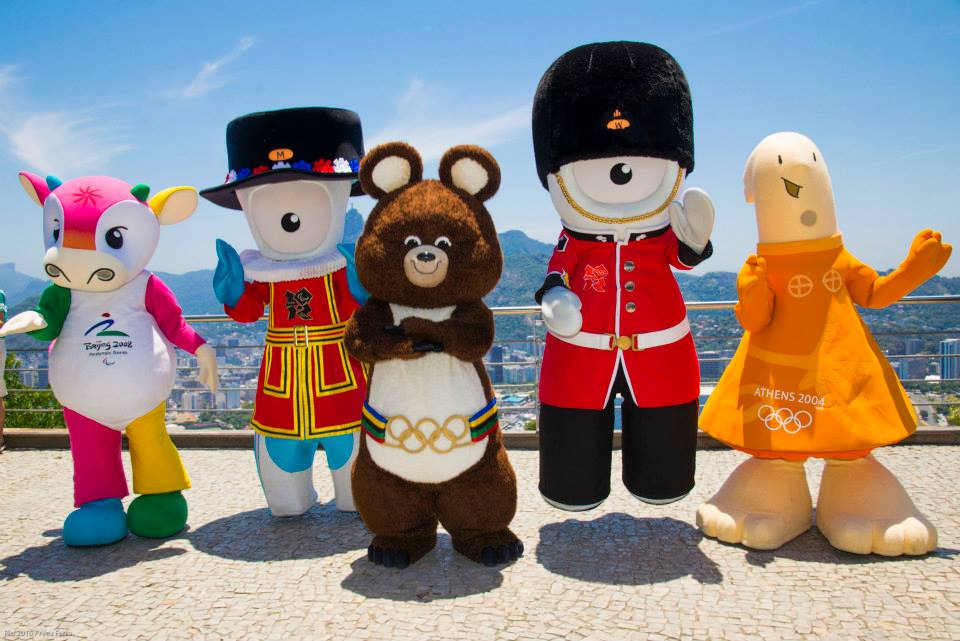
11599_10152876941534111_291692445796855411_nAhead of Rio hosting the Olympic and Paralympic games in 2016 a group of mascots from previous games dropped in on the city to show their support. They included Misha (Moscow 1980), Athena (Athens 2004), Fu Niu Lele (Beijing 2008), Wenlock and Mandeville (London 2012).

The Olympic games will take place 5-21 August 2016 and the Paralympic 7-18 September 2016.

10347253_10152876940544111_8217535064030754620_n1798541_10152877275834111_4445916134244637969_n10298686_10152874685869111_2647910578326830313_n

More athletes book their spot in Rio for 2016

456696546.jpgIn recent weeks the USA women’s basketball team has booked its place at the Rio Olympics alongside the USA men’s team. Both won their respective world championships.

Also through are the Colombia women’s football team who qualified by coming second to Brazil in the Copa America. The women’s football tournament at the Rio 2016 Olympic Games will be contested by 12 teams. In addition to Brazil and Colombia, there will be three European teams, two from Africa, two from Asia, two from North and Central America and one from Oceania. Places will be allocated according to the results of continental qualifying competitions.

The first two hockey teams have also won their places at the Rio Olympic Games, with India’s men and the Republic of Korea’s women confirming their berths by winning the gold medals at the recent Asian Games, in Incheon, the Republic of Korea.

The men’s and women’s hockey tournaments will each feature 12 teams. Five berths in each gender will be obtained through continental tournaments, such as the Asian Games, while six will be won through the 2014/2015 Hockey World League. The 12th spots are reserved for Brazil if the host nation’s teams achieve performance criteria set by the International Hockey Federation.

coreia_do_sul_-_asian_hockey_federationFive more countries have confirmed their places in the shooting competition following the world championships when 27 nations booked their spots. The Shooting Championship of the Americas, held in Guadalajara, México, has confirmed a further 11 places. Cuba claimed the largest number of berths by winning five events, while the USA took three spots. The Dominican Republic, El Salvador and Ecuador won one place each.

China was top of the shots at 51st International Shooting Sport Federation World Championship in September 2014, winning nine berths for the first Olympic Games in South America. Germany, the Republic of Korea, Italy and Russia each claimed five spots, while France and Slovakia secured three places.

The other nations to win places at Rio 2016 were Australia, Belarus, Spain, USA, Great Britain, Norway, Serbia, Ukraine and Vietnam (two each), Bulgaria, Chinese Taipei, People’s Democratic Republic of Korea, Croatia, Denmark, Egypt, Slovenia, Hungary, India, Czech Republic and Turkey.

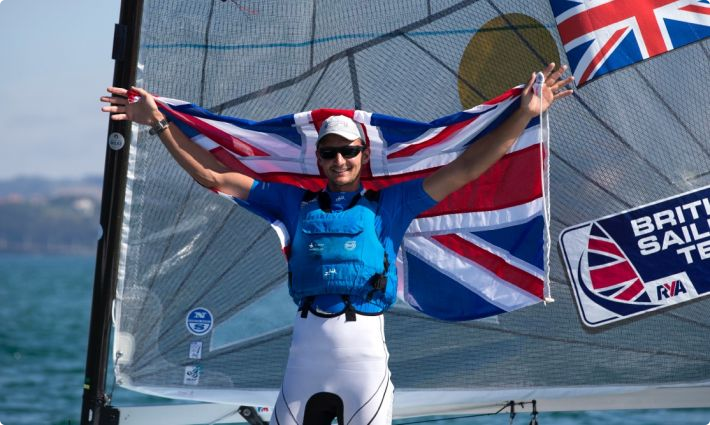
scott.jpgSailing has delivered the largest bulk of Rio 2016 Olympic Games qualifiers yet, as 138 places – more than half of the sport’s total for the event – were won at the ISAF Sailing World Championships in Santander, Spain.

New Zealand, Great Britain and France finished as the top-performing nations, all claiming berths in each of the 10 Olympic classes. A total of 39 countries won places in Brazil.

The other 36 nations that won Rio 2016 places were: Denmark (7), the Netherlands (7), Italy (7), Australia (6), Spain (5), the USA (5), Russia (5), Sweden (5), Austria (4), China (4), Croatia (4), Finland (4), Norway (4), Germany (3), Ireland (3), Japan (3), Poland (3), Portugal (2), Lithuania (2), Israel (2), Argentina (2), Cyprus (2), Belgium (2), Canada (2), Slovenia (2), Greece (2), Switzerland (2), Belarus, Estonia, Guatemala, Hungary, the Virgin Islands, Mexico, the Czech Republic, Singapore and Tunisia.

In total, 274 boats will compete in Guanabara Bay at the Olympic Games. In addition to the 138 that qualified in Santander, a further 47 will win their places at the 2015 world championships and 75 at continental qualifiers held in 2015 and 2016. Brazil will be allocated 10 places and the remaining four spots will be by invitation by the International Sailing Federation.

Veterans and new faces shine in competition at Festival do Rio 2014

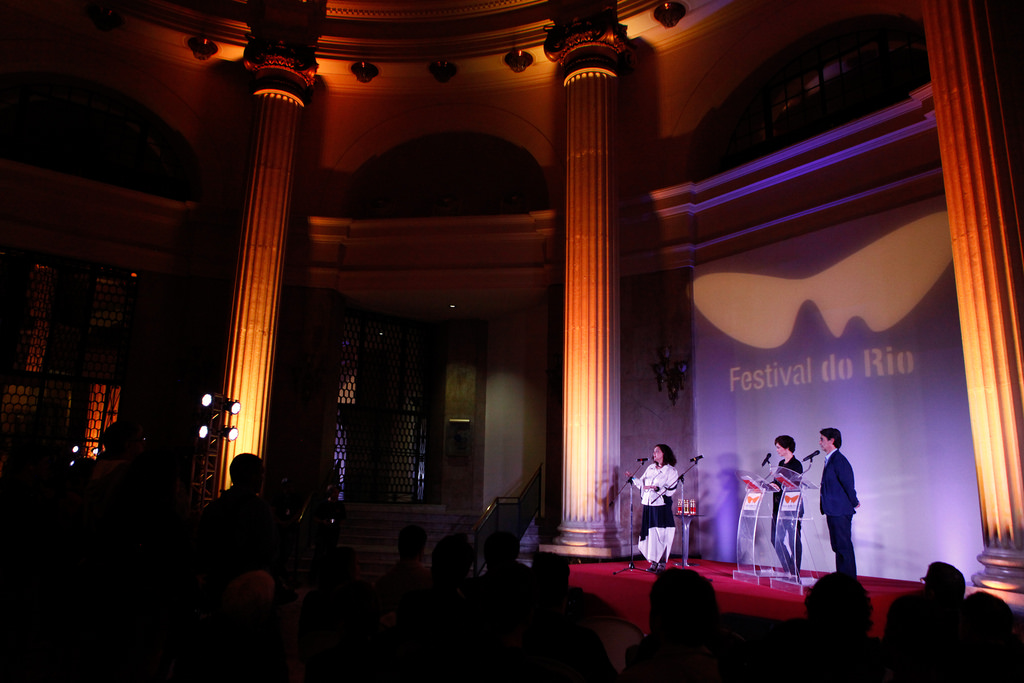
IMG_1813Latin America’s biggest annual celebration of cinema closed on Wednesday 8 October by handing out its traditional Première Brasil ‘Redentor’ trophies, which highlight new work by home grown filmmakers, as well as recognising filmmakers in other categories.

The Premiere Brazil awards were dominated in the fiction category by Pernambuco director Lírio Ferreira’s (photo) drama Sangue Azul (Blue Blood) that offers a parallel between cinema and circus and speaks of the sea, art and love. The film took home three prizes including Best Feature, Best Director and Best Supporting Actor for Rômulo Braga.

Director Ferreira is something of a Festival do Rio veteran having screened previously Árido Mo-vie, Cartola – Música para os olhos and O homem que engarrafava nuvens.

In the feature length documentary competition line up, diretor Theresa Jessouroun’s (photo) À Queima Roupa (Point Blank) which delves into police violence and corruption in the city of Rio over the past twenty years, also picked up the top two prizes in its category, scooping both the Best Film and the festivals new Best Director award for documentaries.

IMG_1817There were double wins for Chico Teixeira’s coming-of-age drama Ausência (Absence), which won the Best Actor Award for the child actor Matheus Fagundes, and also received the Special Jury Prize, as well as for Sao Paulo diretor Gregorio Graziosi’s Obra that ended the night with awards for Best Cinematography for DOP André Brandão as well as receiving the FIPRESCI  prize as the best Latin American film at the festival.

Other prizes given out on the night saw relative newcomer Bianca Joy Porte receive the Best Actress award for her role in director Daniel Aragão’s father and daughter relationship drama Prometo um dia deixar essa cidade (I Swear I’ll Leave This Town), and the Best Supporting Actress award go to Fernanda Rocha for her part in Iberê Carvalho’s O Último Cine Drive-In.

Other special awards saw well-known actor Othon Bastos receive an award for his body of work, while earlier in the festival Mexican director and screenwriter Guillermo Arrriaga had been presented with the FIPRESCI Latin American Personality of the Year award.

Prizes in the Première Brasil Novos Rumos (New Trends) section were presented to Castanha by Davi Pretto for Best Film, while the Best Short award went to O Bom Comportamento (The Good Behaviour) by Eva Randolph. Director Alfeu França received the Special Jury Prize for his 30-minute short A Deusa Branca (The White Goddess).

Of the winning features, six received their world premieres at Festival do Rio.

Once again the public vote from amongst the cinema going public in Rio was at odds with the official jury. The public voted Fellipe Gamarano Barbos’ Casa Grande (photo) best feature length fiction film and Rodrigo Felha’s Favela Gay, which shows the life of the LGBT community in the favelas of Rio de Janeiro, as best documentary.

IMG_1805The public’s favourite short was awarded was to director Andre Amparo’s Max Uber which examines the work of the internationally acclaimed Brazilian visual artist of the same name.

In the Generation’s section the audience award went to Frans Weisz’s Finn from Holland.

The international FIPRESCI jury made up by Ernesto Diez-Martinez (Mexico), Luiz Zanin (Brazil), and Roni Filgueiras (Brazil) chose Brazilian director Gregorio Graziosi’s Obra as the Best Latin American Film at the festival.

Earlier in the event, the festival presented for the first time its new Felix awards, given to recognise the best LGBT films in the festival. Three awards were given in a ceremony at Rio’s prestigious Banco do Brasil cultural centre, CCBB, presented by among others Rio’s re-elected Federal Deputy Jean Wyllys and popular actor Mateus Solano. Reflecting the international reach of the festival, the awards recognized gay filmmaking achievements from Brazil, Australia, Greece, France and Belgium.

IMG_1751The winners were for Best Fiction Feature, Xenia, directed by Panos H. Koutras; for Best Documentary De Gravata e Unha Vermelha (Tie and Red Nail), directed by Miriam Chnaiderman; with a Special Jury Prize for 52 Tuesdays, directed by Sophie Hyde.

Rio 2016 announces ticket prices for Olympic Games

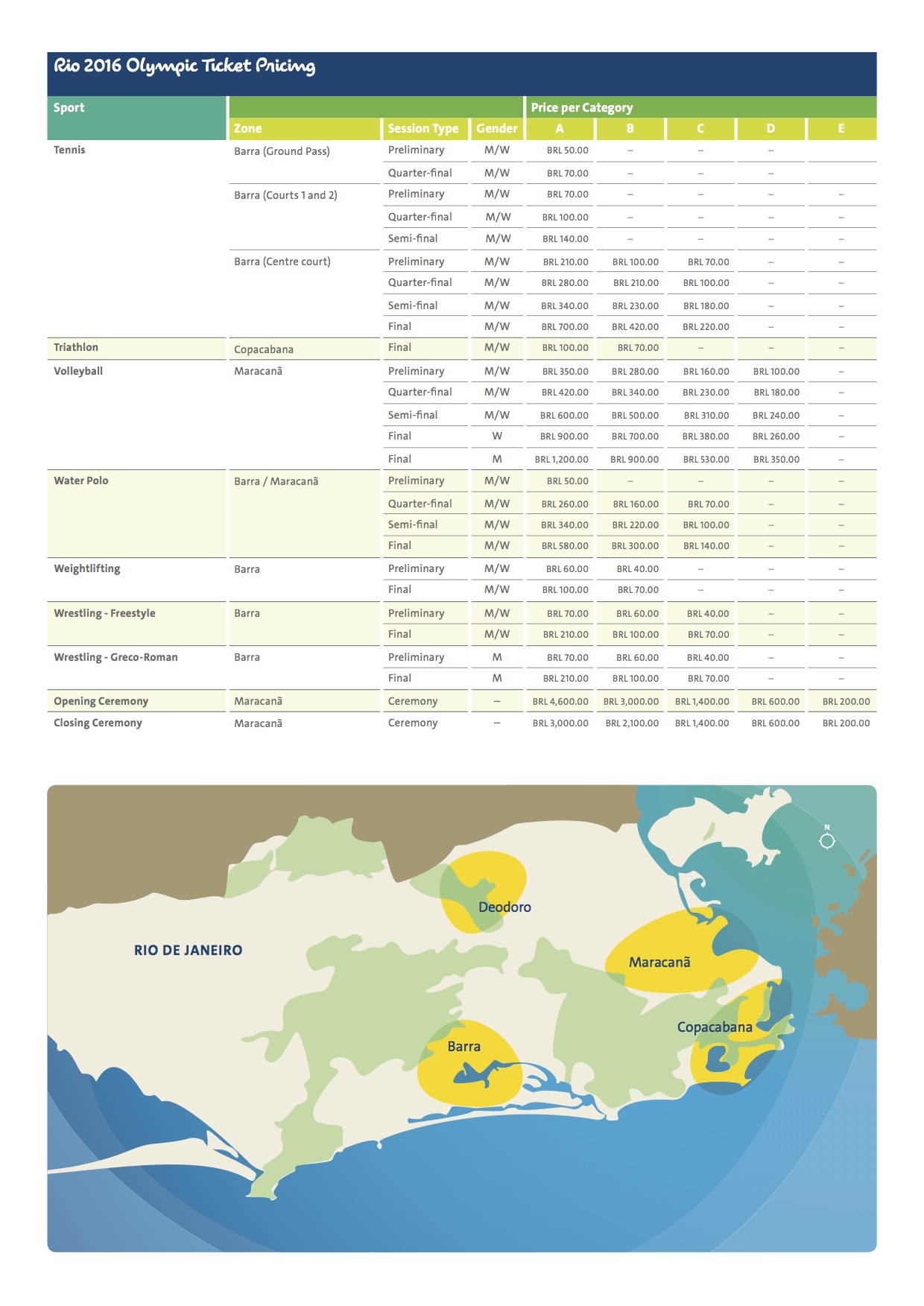
ticketsTicket prices for the Rio 2016 Olympic Games have been announced – and more than half of them will be sold at accessible prices in order to ensure that the event is open to everyone. About 7.5 million tickets will be issued and approximately 3.8 million of these will be available for 70 Brazilian reais (US$30) or less. For the price ranges (in Brazilian reais) for all sports and ceremonies CLICK HERE. Or click on the images below.

Currently (16 September), R$10 is worth about US$4.30, €3.30 or £2.60.

There will be tickets for 717 sports sessions, covering all 28 Olympic sports, plus the opening and closing ceremonies. The range of prices the organizers say is designed to make tickets as affordable as possible, with the goal of ensuring that the local Brazilian population has the opportunity to attend events. The cheapest ticket will be priced at 40 Brazilian reais (less than US$20).

The full Rio 2016 Olympic Games Ticket Sales Programme will be unveiled in November 2014, along with the competition schedule and details on how the public can buy tickets.
The next step on the spectator’s journey towards participating in the first Olympic Games to be staged in South America will come in November. Fans from all over the world will be able to register on the ticket sales website and indicate which sports are of  interest to them. They will then receive tailored news and information on these sports and athletes, as well as other events around the Games, as anticipation builds towards 2016.

Brazilian residents will be able to enter the first of two draws for tickets in March 2015. Non-Brazilian residents will be able to apply to buy tickets in their own territories in the first half of 2015 (details will be announced on the ticket sales website at a later date) and then again in January 2016, in the worldwide first-come-first-served online sales phase.

Ticket_prices_1Ticket_prices_2Ticket_prices_3

Rio’s Olympic Village takes shape

As these photos show, the Olympic Village for the 2106 Olympic and Paralympic games in Rio de Janeiro is starting to take shape.

The Village is being built on what was the city’s motor racing circuit in Barra da Tijuca (top photo). The circuit held its first Formula 1 Grand Prix in 1978, and then held the Brazilian Grand Prix every year between 1981 and 1990.

The new space will not only house the athletes village but also a number of the sports.

IMG_1574IMG_1575IMG_1578IMG_1579

First equestrian teams qualify for the 2016 Rio Olympics

Screen Shot 2014-08-31 at 19.18.47With the results at the 2014 World Equestrian Games in France the eventing teams from Germany, Britain, Netherlands, France, Australia and Ireland have qualified for the 2016 Rio Olympics. Showjumping teams to qualify for Rio include the Netherlands, France, US, Germany and  Sweden.

They join the German, British and Dutch dressage teams that became the first in any sport to qualify for the Rio Olympic games.

Brazil has automatically qualified as the next Olympic host nation.