The Greatest Show on Earth – Desfile
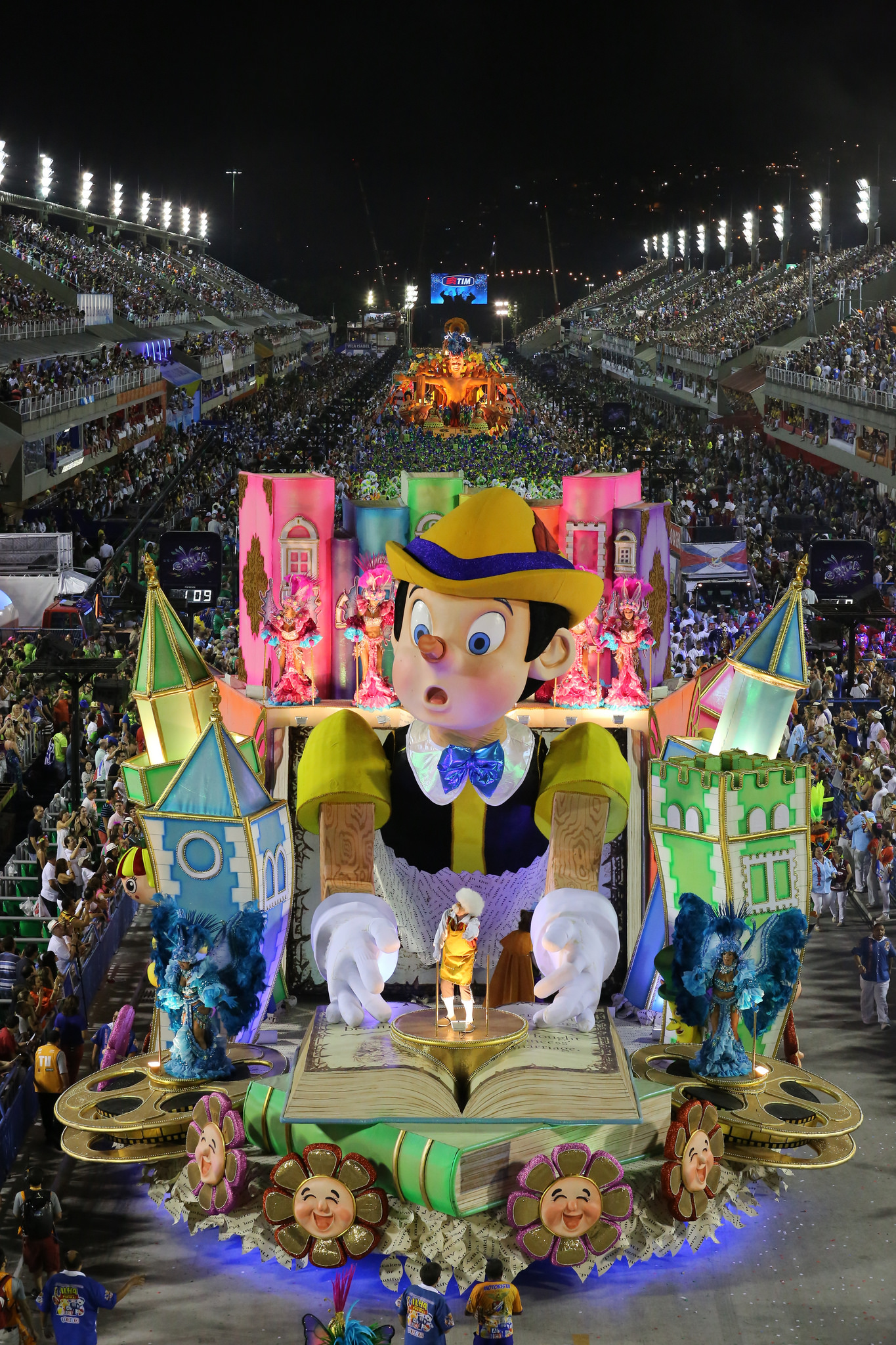
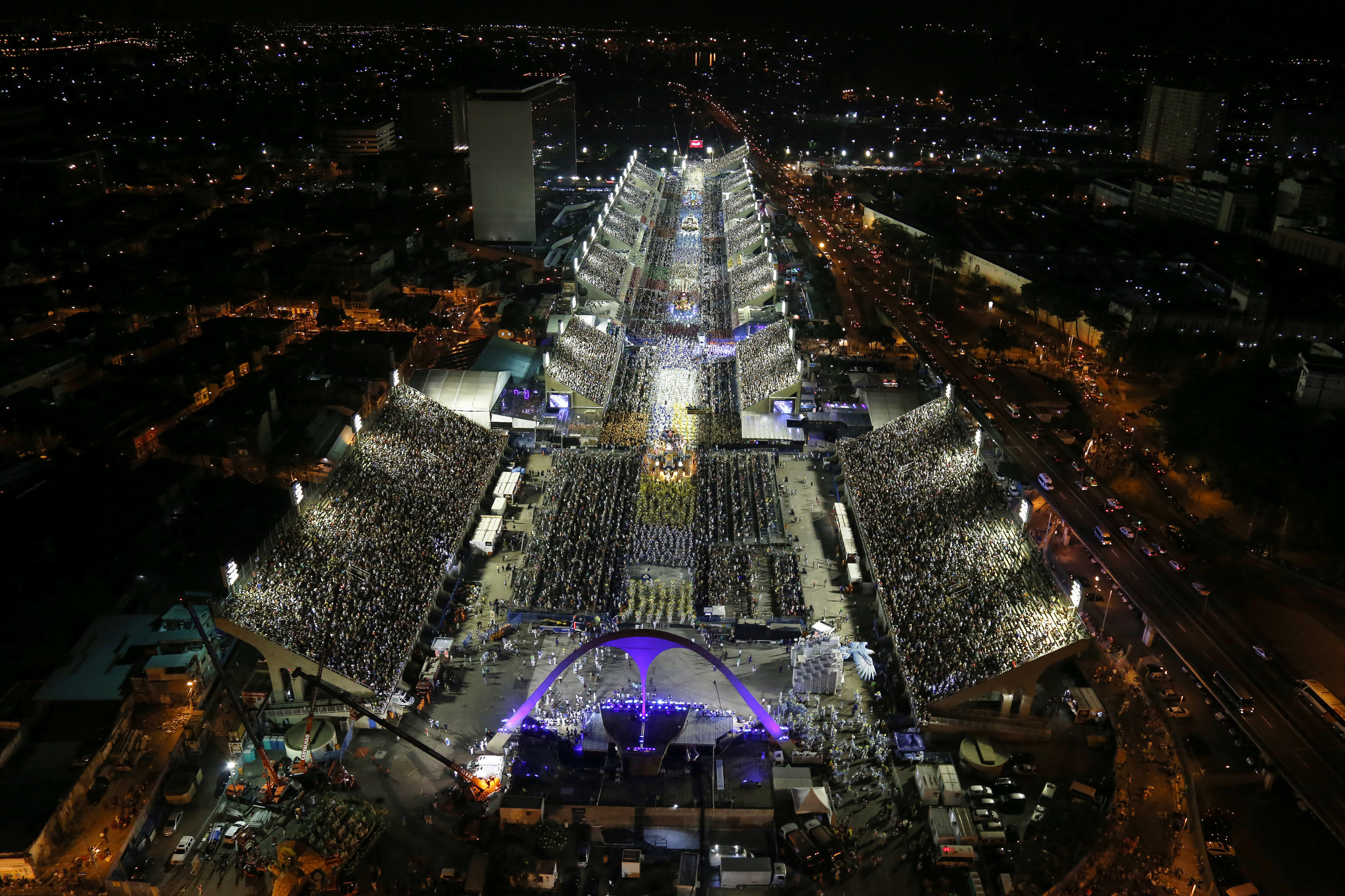
 The best known ingredient of Rio’s carnival, in world terms, is the Sunday, Monday, and since 2025, Tuesday night parades of the city’s top samba schools (working class social clubs), that take place along the purpose built 75,000 seater Passarela do Samba (Sambódromo) which is located on Av. Marquês de Sapucaí, close to the city center.
To many, including some Brazilians, the parade of samba schools is just that, a parade, which is a pity, because it is anything but, and so much more. It is a competition, a story, a history lesson, dance, song, movement, in fact the ultimate theatrical performance over three nights by nearly 40,000 actors and dancers, the vast majority of whom are amateurs. If you take the time to read what follows you will learn a little about the riches of the parade, what to look for and when. You may even be tempted to take part. Because you can, if you would like to.
 So let’s start with the basics and the simple facts that are often overlooked.
If you can accept, for a start, that you are not watching a parade but theater, albeit on the move, you will be a long way to appreciating the spectacle.
 Imagine that you are watching the main shows from Broadway or London’s West End passing you by in the street. It is as if one samba school chooses to present Les Misérables, another Hamilton or Phantom of the Opera, another Mama Mia, another Wicked, another The Book of Mormon, and so on. The schools will present over two nights at least 12 different “pieces” and, unless they are among the six top schools, it will be the “musical’s” one and only performance.
The most recent parades of Grupo Especial – the Premier League of samba – took place in 2026 on the nights of Sunday, 15 February; Monday, 16 February; and Tuesday, 17 February. The results (out of 270 points) were:
- Viradouro (270 points)
- Beija-Flor (269.9)
- Vila Isabel (269.9)
- Salgueiro (269.7)
- Imperatriz (269.4)
- Mangueira (269.2)
- Unidos da Tijuca (268.7)
- Grande Rio (268.7)
- Paraíso do Tuiuti (268.5)
- Portela (267.9)
- Mocidade (267.4)
- Acadêmicos de Niterói (264.6)

But carnival proper starts many, many months before the actual parade when each of the schools will meet individually to decide what the theme – the enredo – of their particular presentation will be.
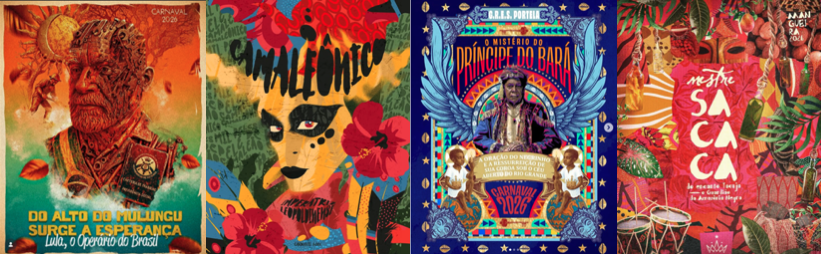
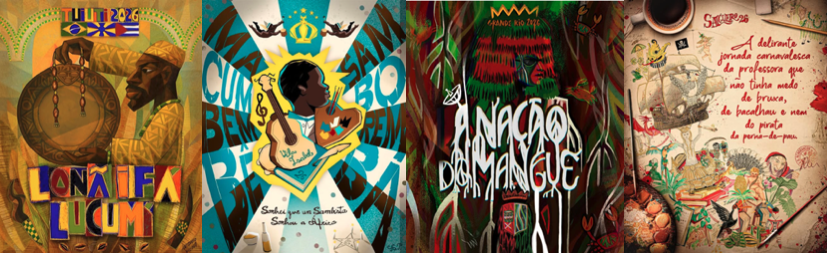
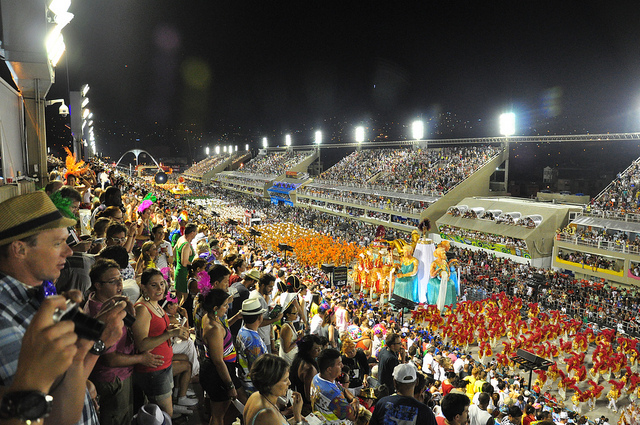 A diverse selection of themes and story lines will be chosen to be presented. In 2026 they included the samba called “The Delirious Carnival Journey of the Teacher Who Was Not Afraid of Witches, Codfish or Even the Pirate with a Wooden Leg” (“A delirante jornada carnavalesca da professora que não tinha medo de bruxa, do bacalhau e do pirata da perna-de-pau”). Salgueiro’s tribute to carnavalesco Rosa Magalhães, one of carnival’s greatest, who died in 2024. The theme a playful parade inspired by the artist’s creative career, bringing together characters, myths and references from her historic parades from past carnivals. Acadêmicos de Niterói offered a theme based on the life of President Luiz Inácio Lula da Silva. Imperatriz paid tribute to Ney Matogrosso, one of the biggest names in Brazilian music. Portela honoured Prince Custódio, a historical and spiritual figure of African origin from the 19th century, highlighting the black presence in southern Brazil and the amalgamation between African-based religions and popular traditions. Mangueira told the story of Mestre Sacaca (Raimundo dos Santos Souza), a reference in Afro-indigenous knowledge in Amapá. Known as the “Doctor of the Forest,” he was renowned for his knowledge of Amazonian herbs, roots, and saps, used in the treatment of diseases and community care. Mocidade paid tribute to Rita Lee, who died in 2023. The samba celebrates the musical, aesthetic and behavioural legacy of the artist, a symbol of avant-garde and freedom of expression. Beija-Flor focused on the Bembé do Mercado, a ceremony held for over 130 years in Santo Amaro da Purificação, considered the largest street candomblé in the world. Viradouro, the champions, paid tribute to Mestre Ciça who will turn 70 in 2026 and is taking part in his 55th parade. He won two titles for Viradouro, in 2020 and 2024, and is recognised for his longevity, strength and innovation at the head of the school’s percussion section. Unidos da Tijuca paid tribute to writer Carolina Maria de Jesus. Considered one of the most powerful voices in Brazilian literature, Carolina portrayed life in the favelas and social inequalities in depth. Paraíso do Tuiuti theme ,”Lonã Ifá Lukumi”, addressed an Afro-Caribbean religion being rediscovered in Brazil, mixing Brazilian and Caribbean sounds in the melody. Vila Isabel honoured Heitor dos Prazeres, an artist who played a fundamental role in the history of samba and carnival. Creator of the expressions “Little Africa” and “Africa in Miniature,” Heitor participated in the first carnival ranchos, and has had internationally recognised works, including a painting acquired by Queen Elizabeth II. Grande Rio looked at Manguebeat, a cultural movement that emerged in Pernambuco in the 1990s, mixing regional rhythms such as maracatu with rock, hip-hop, and electronic music.
In 2025 they included Padre Miguel paying homage to the history of the Terreiro da Casa Branca do Engenho Velho, the first Candomblé terreiro (Afro-Brazilian temple) in Brazil; Imperatriz Leopoldinense told the story of Oxalá’s desire to visit the kingdom of Xangô, both orishas (divine spirits) and kings within axé culture; Viradouro presented the story of Malunguinho, a hero of the 19th century and the leader of the Catucá Quilombo (a community organised by fugitive slaves) in the north of Pernambuco; Mangueira explored the arrival of the Bantu people at Rio’s Valongo Wharf and the black presence in the centre of Rio, from the influence of the Bantus to the current reality; Unidos da Tijuca featured Logun Edé, an orisha and boy saint that old men respected, carrying the essence of youth but the strength of traditions; Beija-Flor, the winning school in 2025, celebrated the work of the school’s carnival director, Laila who died in 2021. It highlighted his work in the history of Brazilian carnival along with his invaluable contribution to Beija-Flor’s own story; Salgueiro dived into the rituals used by different cultures throughout history in the search for spiritual protection, including African beliefs, indigenous practices and elements of Rio’s popular culture; Vila Isabel took a walk from childhood to adulthood through the universe of fantastic beings and hauntings that are very strong in Brazilian popular culture; Mocidade took an intergalactic journey that began with the star of Mocidade, the symbol of the school, and the need for the school to shine and return to its former brilliance. At the same time, the school looked at the importance of stars in our lives following on from the Big Bang; Paraíso do Tuiuti told the tale of the first documented trans woman in Brazil, Xica Manicongo, a striking figure who carried within her the resistance and struggle for identity and freedom; Grande Rio plunged into the mysterious waters of the state of Pará and focused on the enchanted entities that inhabit the pororocas, where the rivers meet the sea; and finally Portela honoured the great singer-songwriter Milton Nascimento, highlighting his career and contribution to Brazilian music. A tribute that marked the first time that Portela had honoured an artist during their lifetime. The history and importance of Minas Gerais and Brazilian popular art were also a large part of Milton’s story.

As each school chooses its theme individually it is quite possible, but unusual, that more than one school will choose the same theme. This did happen in 1994 when Imperatriz Leopoldinense, the eventual winner, and Império Serrano, who came last, both chose as their theme the unusual topic of the visit of the Tupinambás and Tabajaras Indians to the French court in the 16th century. In the same year Mocidade Independente had as its theme the Avenida Brasil, the principal access road to Rio, while Caprichosas de Pilares chose Avenida Rio Branco, the main street in downtown Rio. While in 2015 three schools picked themes based on Brazil’s historic relationship with Africa.

Once a school has chosen its theme it is up to the members of the school to write the song, the samba enredo, which fits the theme. The school must give the League of Samba Schools (LIESA) a summary of its samba by the end of July.
By October the schools must select their samba for the coming year’s parade and deliver the lyrics to the LIESA. Today the deadline is tougher than in the past decades because a source of revenue for the schools is the sale of the CD or digital downloads with all the year’s sambas, and that needs to be in the stores and online to take advantage of the Christmas market. In the past as many as one million copies would be sold of the CD prior to carnival.
By December each year we know what the themes of the competing schools are and what the sambas are going to sound like.
Going back in time to the day when the school chose its theme, rather than the final samba enredo, we must introduce the most important figure of any school’s carnival activity: the carnavalesco, who is a cross between a theatrical director and a set designer, only this set has to move up the road with the action.
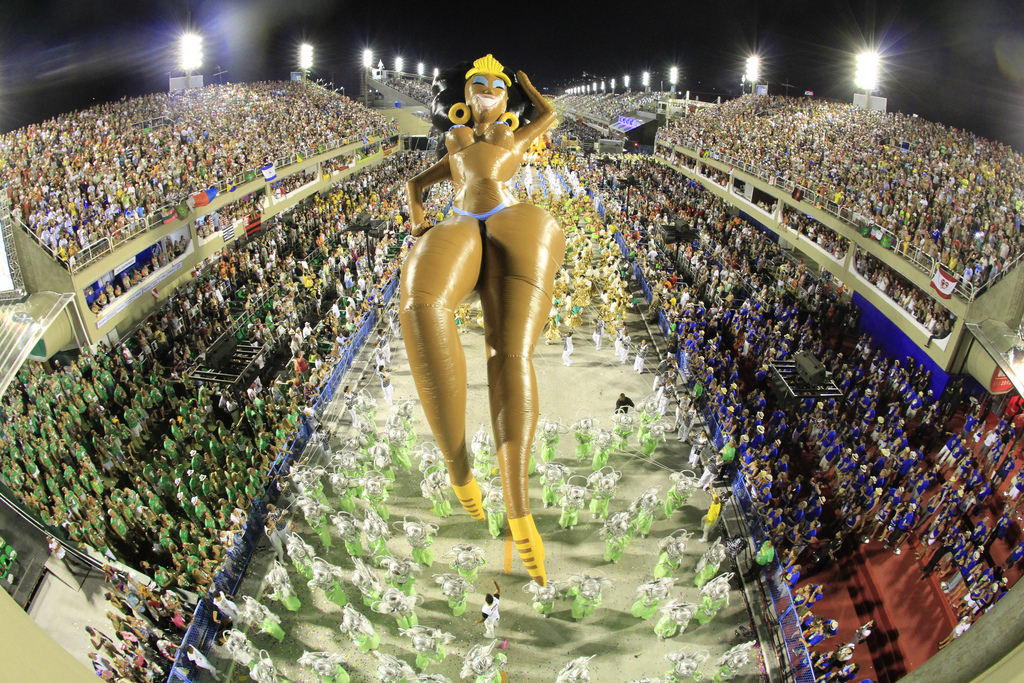 So while the school’s writers start putting together their competing sambas enredo the carnavalesco with their team is already sketching the costume designs for the dancers, the floats and everything else that goes into making the parade one of the wonders of the world.
So what have we got at this stage?
- We have a school.
- We have a theme.
- We have a song.
And we have a person who is coming up with ideas of how the school should parade and what it should look like.
But what makes up the actual parade?
Starting at the Beginning – The Parade
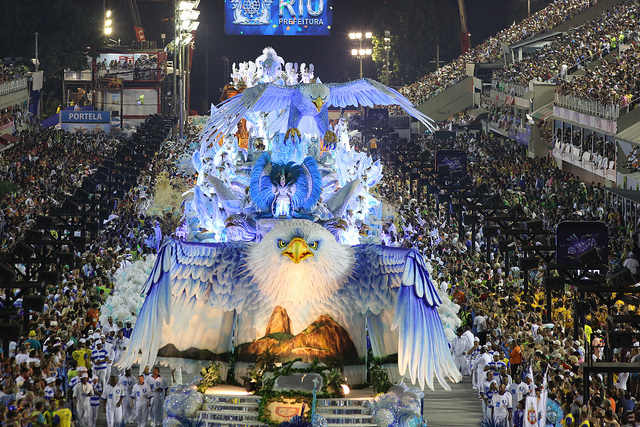 Starting once more at the beginning, you will be greeted as the school comes down the avenue by the Abre-Alas. A literal translation would be the “opening wing” and each similarly dressed group that follows in the school will be known as an ala (wing). The Abre-Alas is the school’s title page, and the float will normally, but not necessarily, represent an open book or scroll. Somewhere on this float should, but again not necessarily, appear the name of the school and before it the letters G.R.E.S., which stand for “Grêmio Recreativo Escola de Samba” (Samba School Recreational Guild).
Close to the Abre-Alas come the Comissão de Frente which holds an important position in the parade as it counts points for the final result, and as a couple or a fraction of a point out of nearly three hundred can mean the difference of a place, a bad or good Comissão de Frente can make the difference between winning, losing or being relegated. In 2017 Mocidade were only crowned joint champion with Portela after an appeal was lodged against a judge and overturned the marking for their Comissão de Frente. 0.1 of a point made the difference. In the past the Comissão de Frente was considered to be the “board of directors” of the school, or at least distinguished looking gentlemen that could pass for being one. In recent decades, however, the image of the Comissão de Frente has greatly changed. In the 1980s Beija-Flor introduced more complex choreography, which has now been copied by all the other schools so the Comissão de Frente will embrace an extremely complex, cutting edge routine. Whatever the school chooses to do, the Comissão de Frente must be made up of at least ten people and by no more than 15.
 But the Abre-Alas and Comissão de Frente are just a start. The bulk of the school is made up of the various alas, the wings, or blocks of people in vaguely similar costume who are linked to one part of the theme. A school in a typical year will have no less than 2,500 participants and no more than 3,200 people split between 30 and 40 different alas — and that is not counting the 200 plus people in the percussion section, the bateria, or the 60 or so women in the Ala das Baianas.
 Some of the alas will be present just to give color and movement, and it has not been lost on the carnavalescos that people, and the judges, view the parade from above. In the old days, all would have been viewed from street level.
 So what is our current state of play?
We have the school, the theme, the song and the person who is responsible for directing the operations. We also now have the Abre-Alas and the Comissão de Frente, and the alas which make up the bulk of the school.
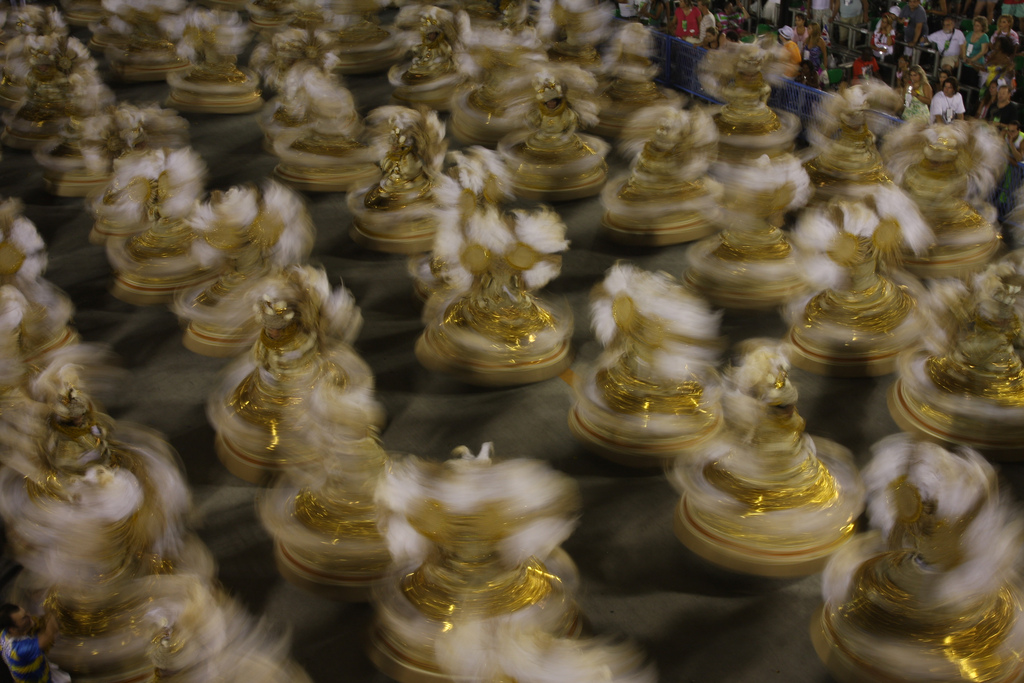
Every school is required to parade with an Ala das Baianas. This consists of at least 60 women, normally black and older, dressed in the traditional flowing dresses of Bahia. Their presence in the parade honors the earliest history of the parade that was brought to Rio from Salvador in 1877.
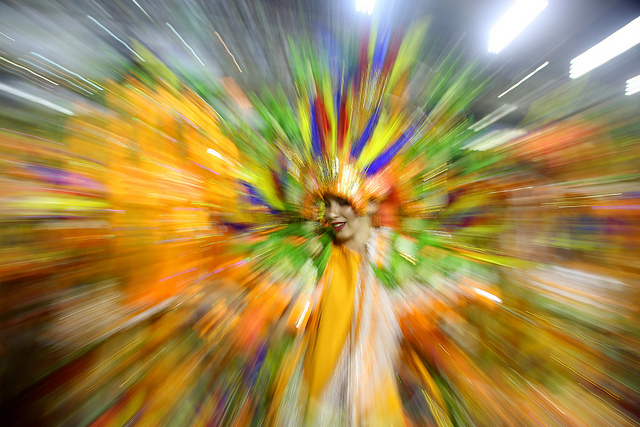
When the baianas all twirl together it is a memorable sight and one of the best sights to film from the stands because even though the movement blurs the photo you will be more than happy with the result, especially when enlarged.
 The Parade’s Individual Components
We now come to the more individual as opposed to collective components of the parade. The most famous, and like the Comissão de Frente counting points, is the Mestre-Sala and Porta-Bandeira, the dance master and standard-bearer.
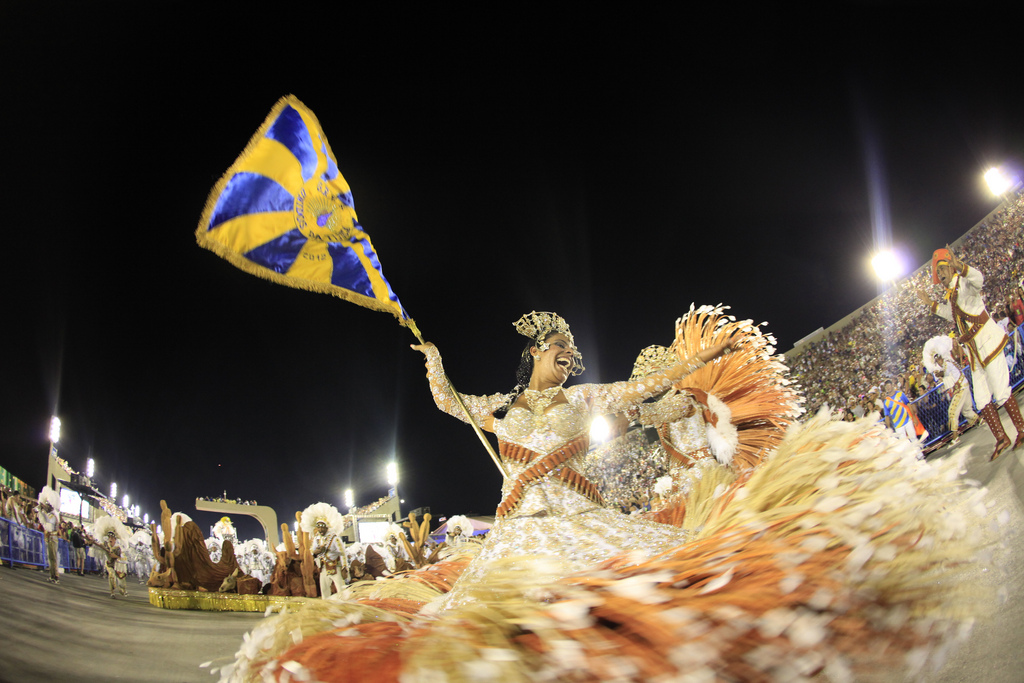 This couple, dressed in lavish 18th century formal wear regardless of the school’s theme, is expected to carry on a complex series of non-samba dance steps as they move up the avenue. The couple present one of the truly artistic presentations of the parade.
The girl, the Porta-Bandeira, has the honor and responsibility of carrying the school’s symbol – its colours in military terms – and her presentation must be dignified and at the same time beautiful. Due to the popularity of the Porta-Bandeira and Mestre-Sala most samba schools have subsidiary couples, even complete alas who are placed throughout the school, couples who dream of one day being the school’s number one couple.
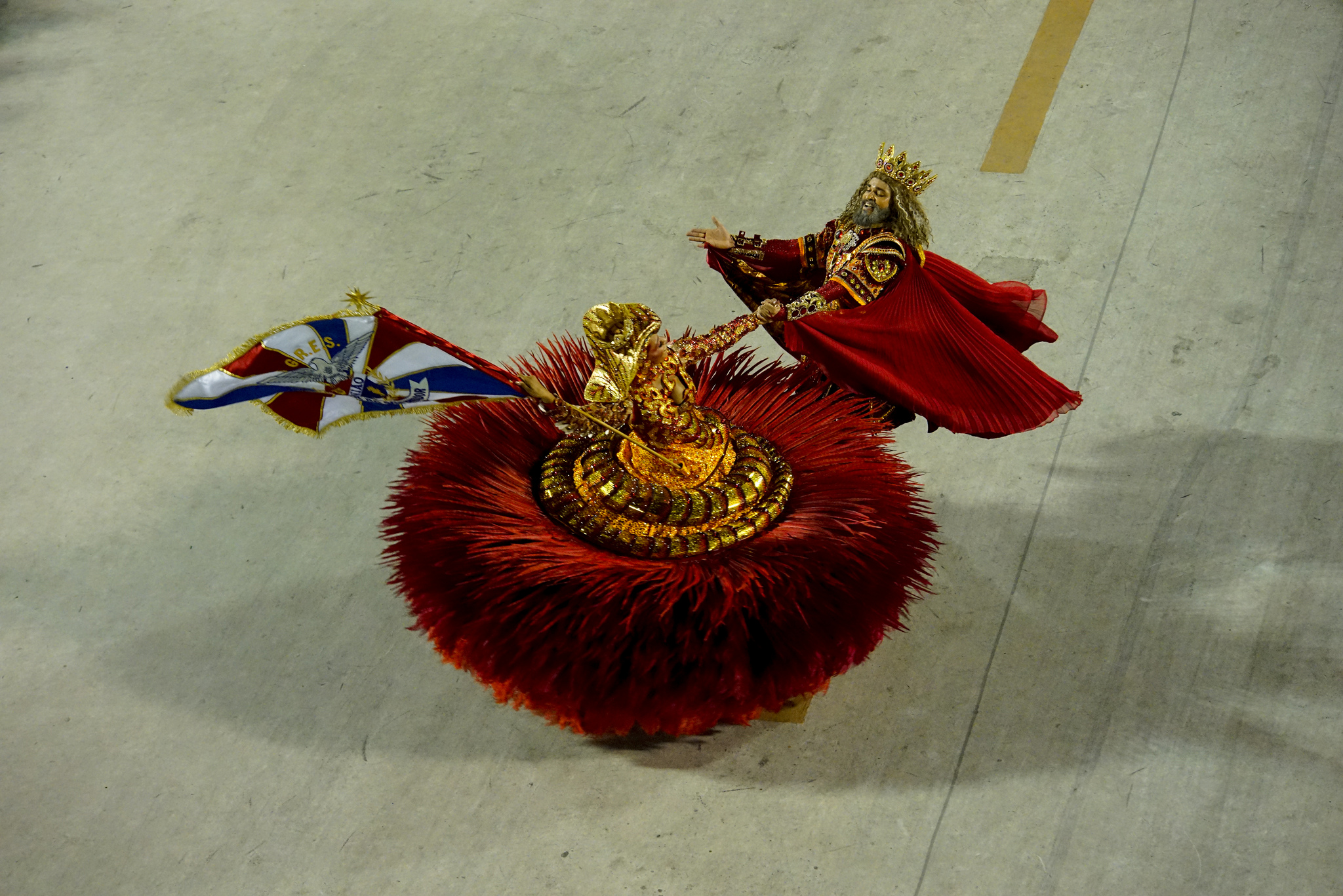 The Porta-Bandeira and Mestre-Sala are not the only important figures in the parade, there are also the Figuras de Destaque or Destaques (prominent figures). These are usually famous personalities or people dressed in the extremely rich costumes that Rio’s carnival is famous for. In the 1970s they decided to put these figures on their own float or cars. The reasons for this were two fold.
 Firstly, the people in heavy costumes were slowing the schools down – one has to remember the weight of the costume, the heat, and the distance that has to be covered. Furthermore, by putting the person on a float you could push them at the speed you want, but also if high enough they have direct eye contact with the public in the stands who they can work to get the school the maximum possible crowd response, and that may influence the judges.
 Finally, in this section we have the Passistas, the most individual aspect of the parade, normally the best samba dancers and the liveliest. The girls will be dressed to the bare minimum while the men will usually carry some form of percussion instruments and perform various gymnastic feats along the way.
 The sound that drives the school comes from the bateria, an army of percussion players (at least 200, according to the regulations), all in the same costume, which beat their way from one end of the avenue to the other. If you stand on the road next to the bateria the force of the sound will literally move you back.
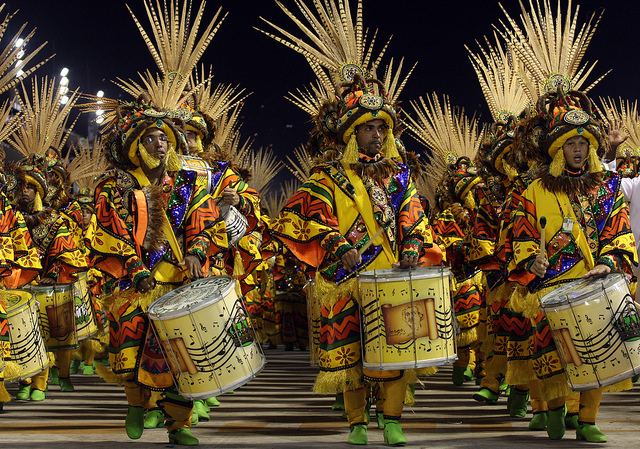 Despite being over 300 strong the bateria still finds it difficult to get its beat to carry over the whole school. For this reason it comes about a quarter of the way through the school. Three quarters of the way down the avenue it will turn off from the school between sectors 9 and 11. Here it will stay while the rest of the school passes, before joining on at the end. At the front of the bateria will be their “queen”, normally a well-known actress or model who will be expected to perform as well, if not better, that the school’s passistas.
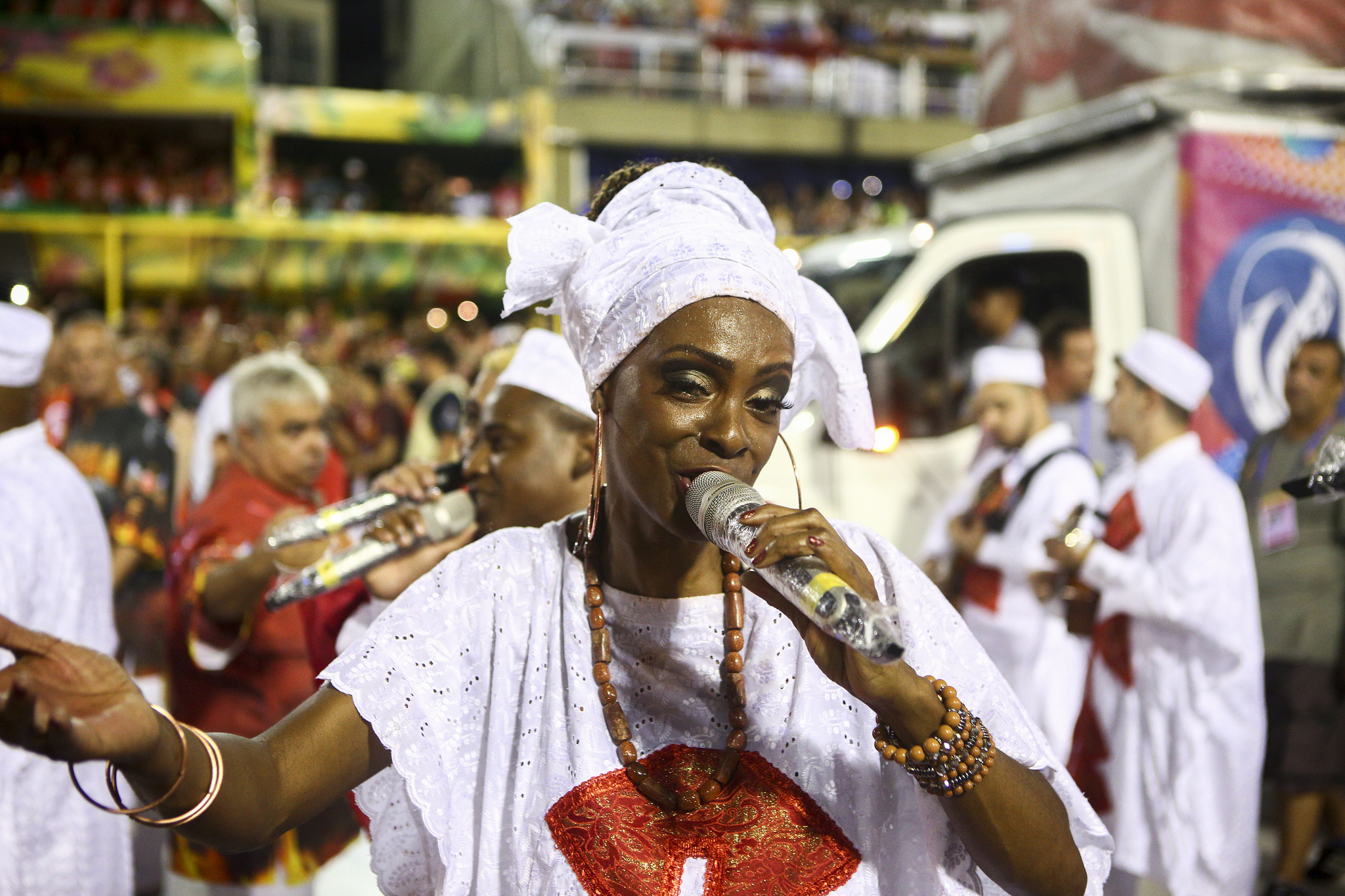
 The Puxador de Samba will walk down the avenida close to the bateria. Normally each school has at least four and sometimes more Puxadores, plus other musicians and singers to help.
In the past the school employed a system of runners who would run from a sound truck back down the school keeping everyone in time with the Puxador. Today, with radio mikes, etc., things are a little simpler and the speaker system stretches from one end of the avenue to the other.
 Finally, we come to the Alegorias or the gigantic floats that are the main set pieces of the parade. A float hardly needs a detailed description but you may be surprised by their sheer size and complexity, as well as their beauty and attention to detail.
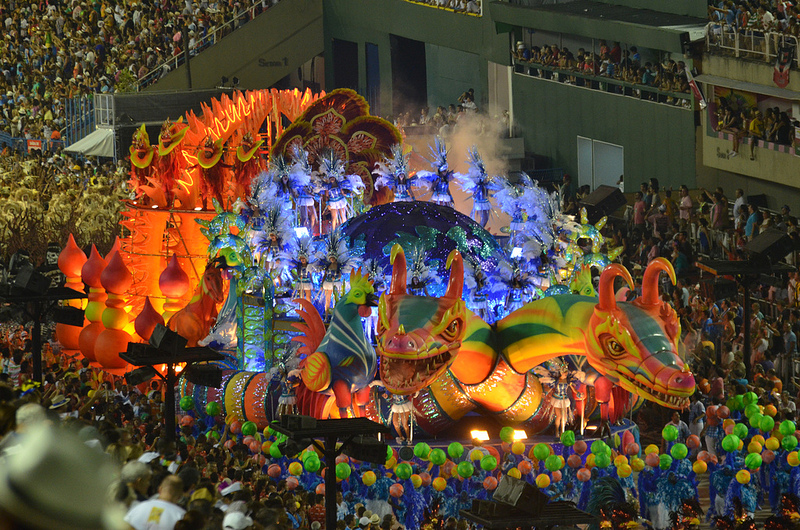 Like the smaller floats that carry the Figuras de Destaque, the larger Alegorias have a big part to play in the contact the school makes with the public to produce the desired response from the crowds. According to the rules, each school is only allowed a set number of floats (a minimum of four and a maximum of six, plus three scenograpic elements knowns as “Tripods”).
 The Parade: How, What and Where
The parade of the main samba-schools starts at around 10.00 pm on the Sunday, Monday and Tuesday nights of carnival with a total of four schools parading each evening. Each school must parade for a minimum of 70 minutes and a maximum of 80 minutes and their floats can be no wider than eight meters (26 feet) and no higher than 10 meters (33 feet). Even if every thing goes to time, the earliest the parade will finish will be around 3.00 or 4.00 am.
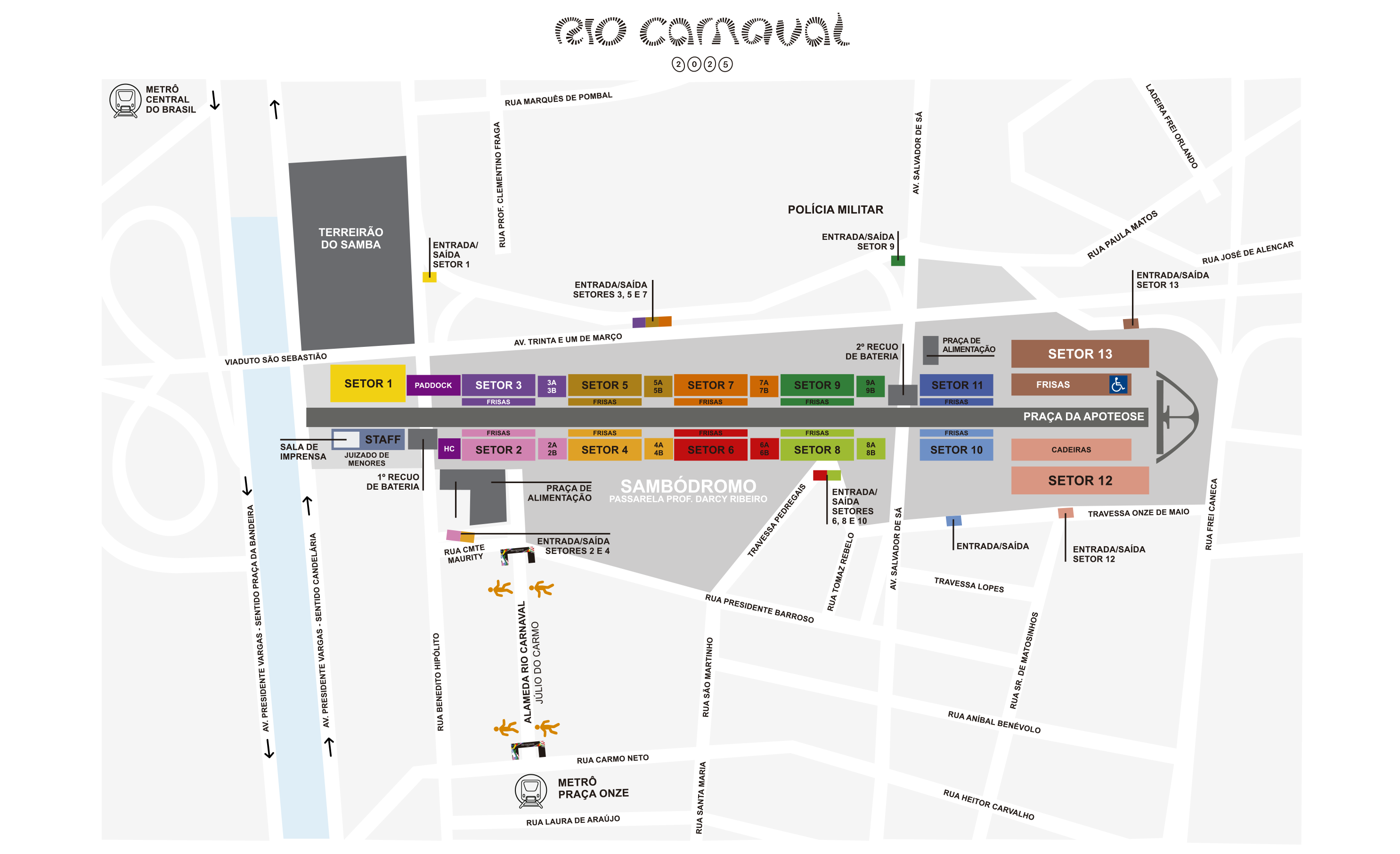
 For the statistically minded, the length of the Passarela is 700 meters or 765 yards and will accommodate a paying public of around 75,000 on each of the nights. The schools, however, will officially parade over 540 meters (590 yards) of the avenue, the half way mark being around the start of stand 9.


The best place to see the parade is, in our opinion, from the frisas, the ringside seats. These have the support of a full bar service. It is also easier to move around and enjoy the evening. They are expensive, but we think worth the investment. You can also pay to go in one of the large boxes, but the view from the frisas is better..
 Tickets for the tourist stands and the cadeiras de pista and frisas as well as the boxes, should be booked through LIESA or good travel agents or tour operators. Don’t expect to get to Rio on the eve of Carnival and pick up a ticket without paying way over the odds. A ticket to carnival is as hot as a ticket to the men’s final at Wimbledon or the Superbowl in the US.
 The easiest way on the night to get to the parade is either as part of a group, who take a bus, or by metro or taxi. The official taxis can drop you right at the door of the tourist stand and will also be on hand to take you back to your hotel or apartment at the end. The metro stations are close by and the air-conditioned trains run throughout the night to drop you back in Copacabana, Ipanema or even Barra.
If you fancy being adventurous you can also take part in the parade. Most of the schools are happy to accept even foreigners in their alas but, at a cost. A price that is likely to be around $200 or more.
For details of how to join a school speak either to a good tour operator or get somebody who speaks Portuguese to call one of the schools or check on the LIESA web site. The ideal scenario would be to watch one night of the big parades and take part in the other.

 Rio the Guide